



Before — this is her
There was a kind of steady. Not perfect — steady. She had energy and vigour; a life force; the capacity to endure. That's all vitality means: a body with enough to engage with the day.
An illustrated story · about 15 minutes · best with sound
Why is grief so exhausting — and how does colour come back?


Illustrations by Vera Decena · from the Threads of Life workshops
Chapter 1 of 9
What vitality is, and the battery that runs it
Before — this is her
There was a kind of steady. Not perfect — steady. She had energy and vigour; a life force; the capacity to endure. That's all vitality means: a body with enough to engage with the day.

Regulated
Scientists call it homeostasis. Her body called it a day where she could learn, feel present, stay curious, express something, and connect. Energy to engage equals living.
Field note · Homeostasis reacts after a change. Allostasis adjusts before one — predicting what the day will cost and budgeting for it. Both run on the same battery.
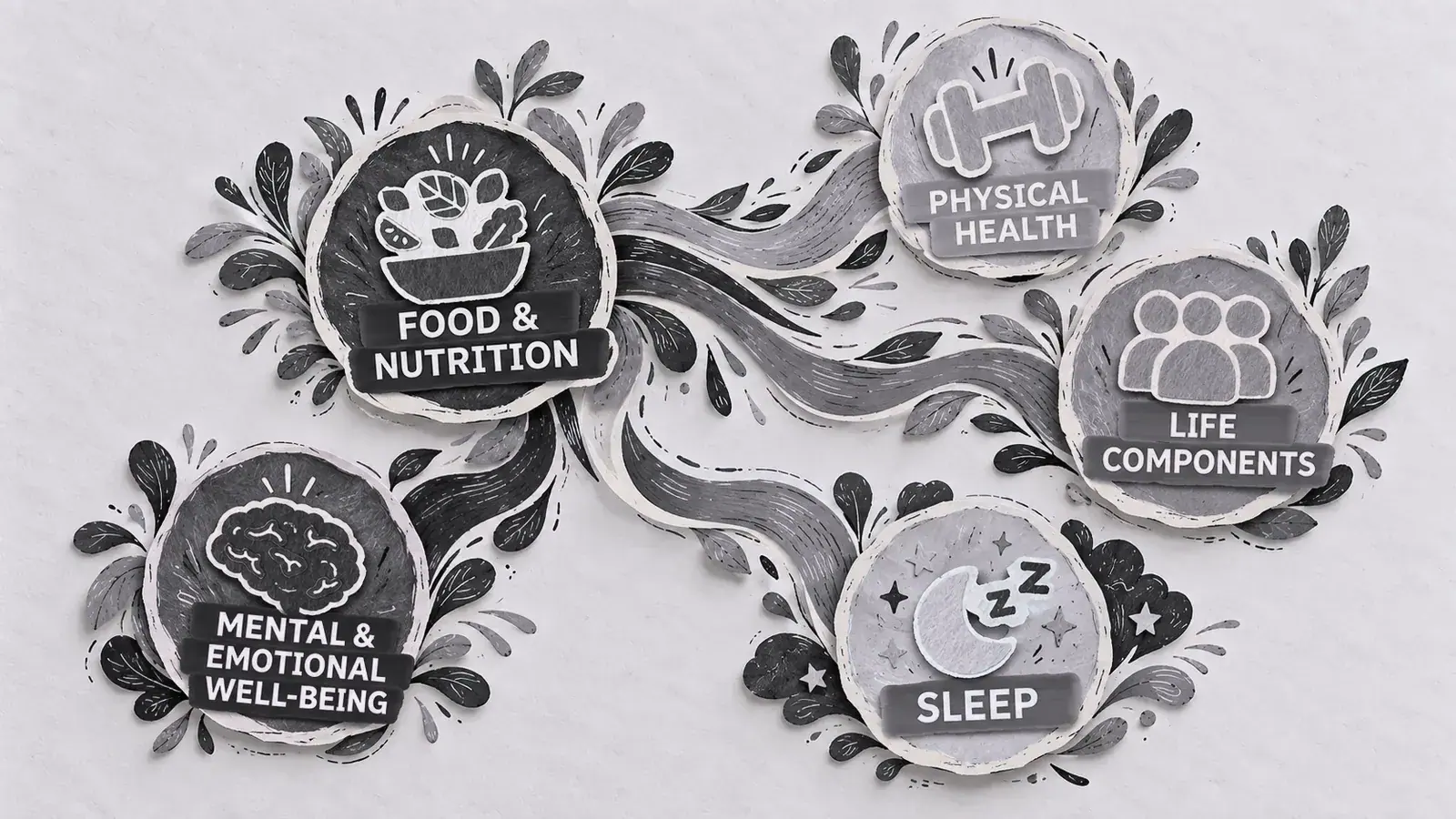

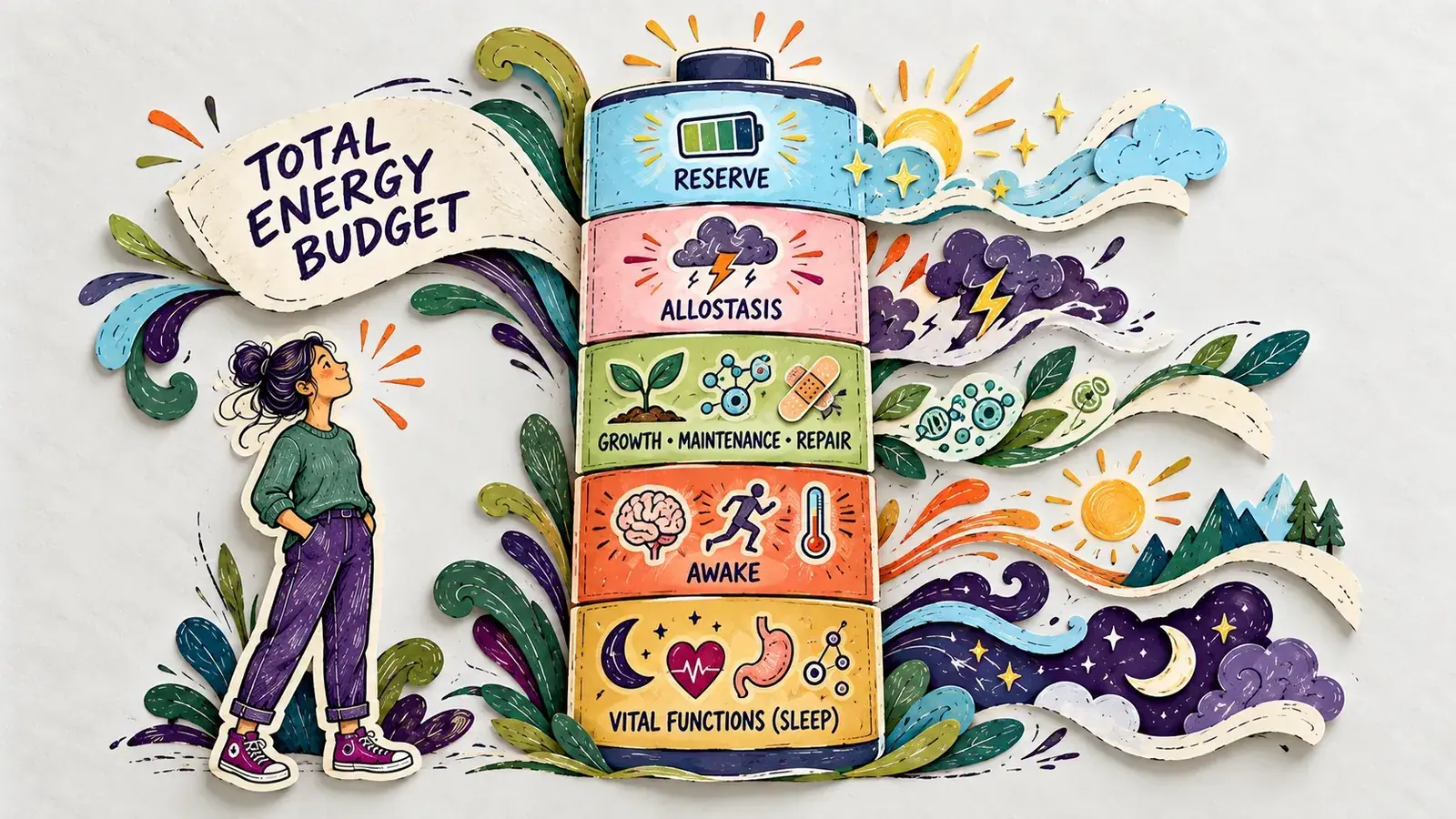
The energy budget
Every day the body pays for the vital functions first, then for being awake, then for growth, maintenance and repair, then for adjusting to whatever's coming. What's left is reserve.
Field note · Reserve is what carries you through a hard week. It is also the first thing grief spends.
Chapter 2 of 9
The alarm, the waves, and what gets cut first


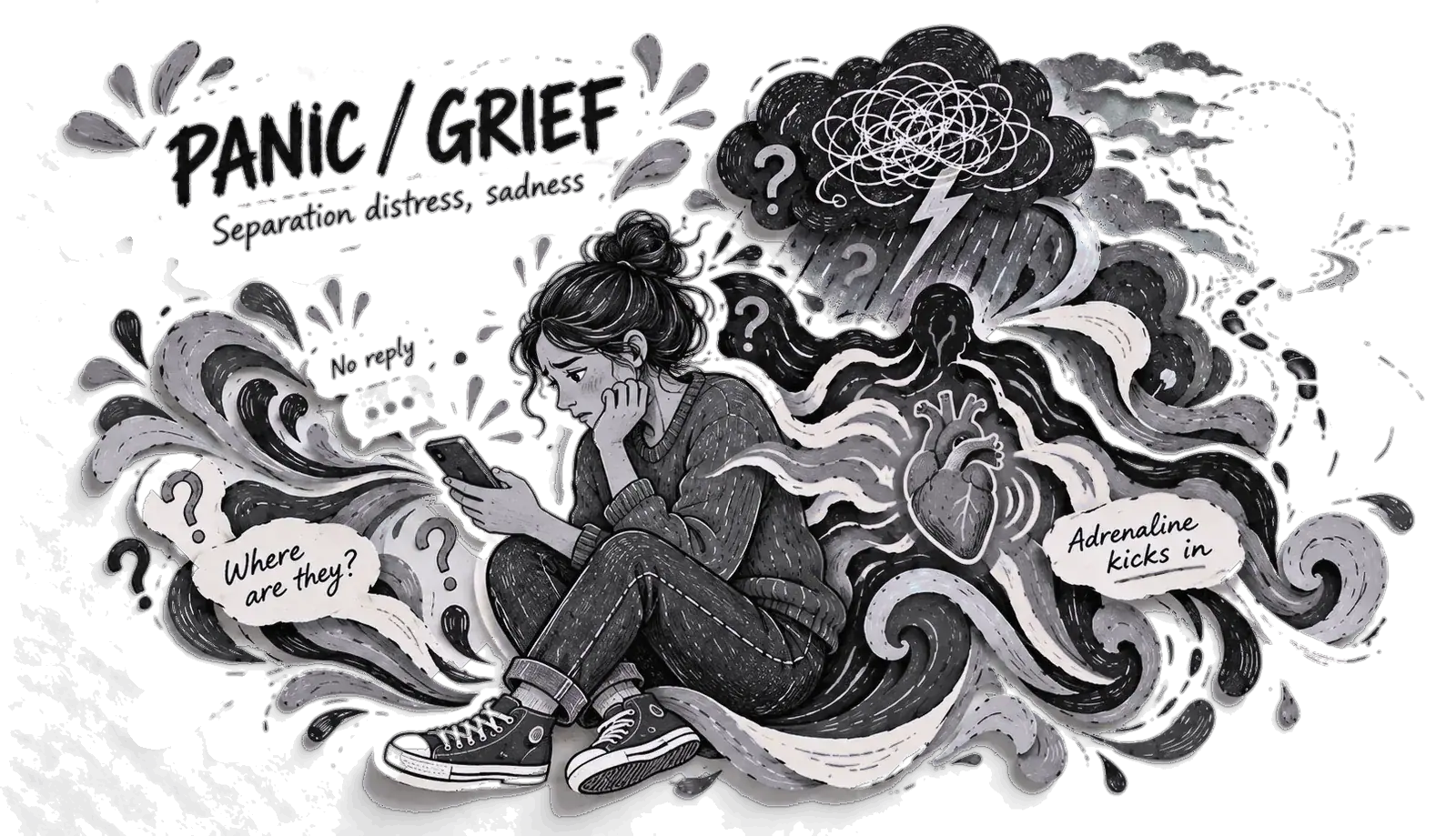
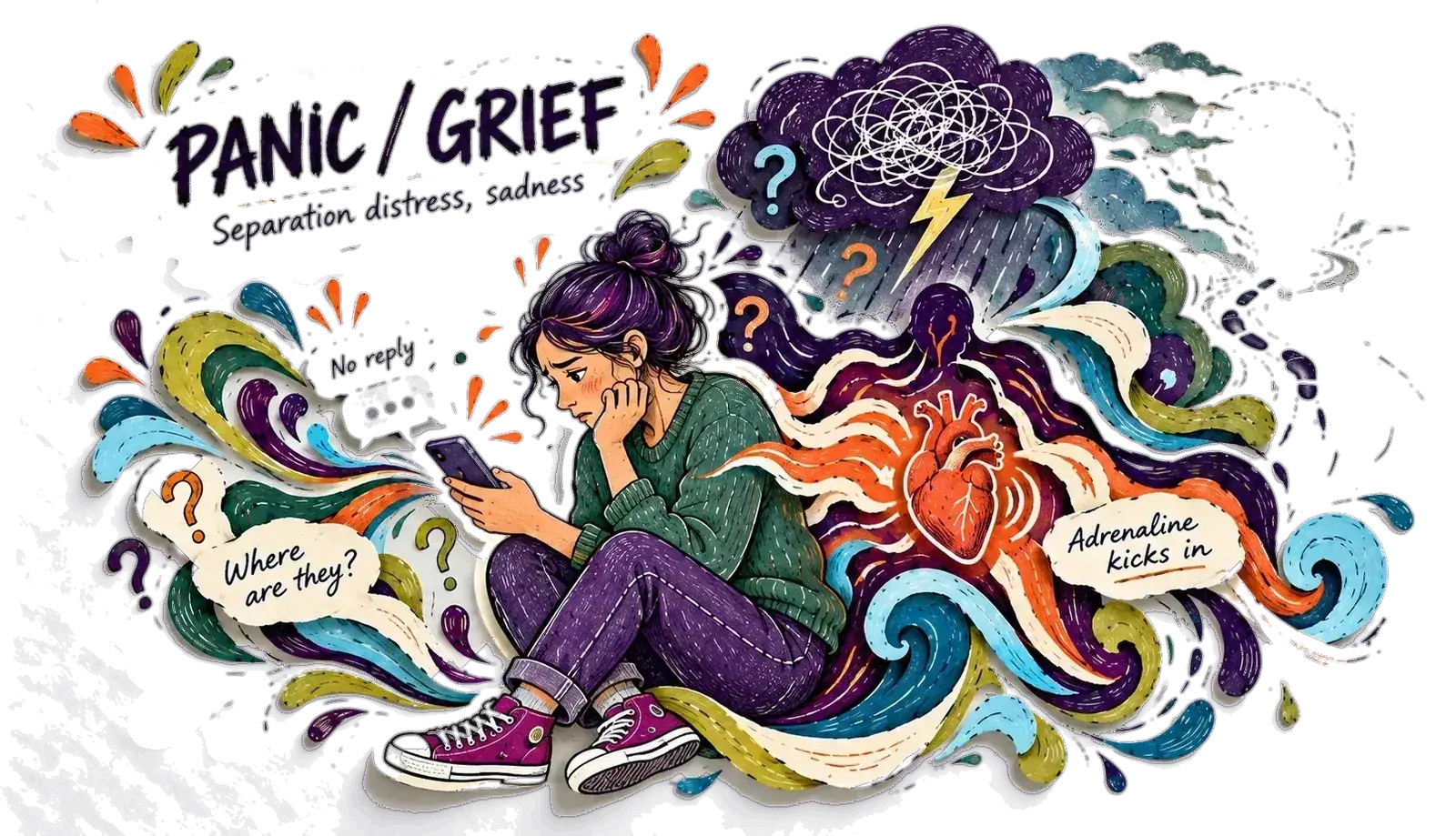
Separation distress
Where are they? No reply. Her brain keeps predicting a person who is no longer there, and every time the prediction fails, the alarm fires again. This is learning — the slowest, most expensive kind.
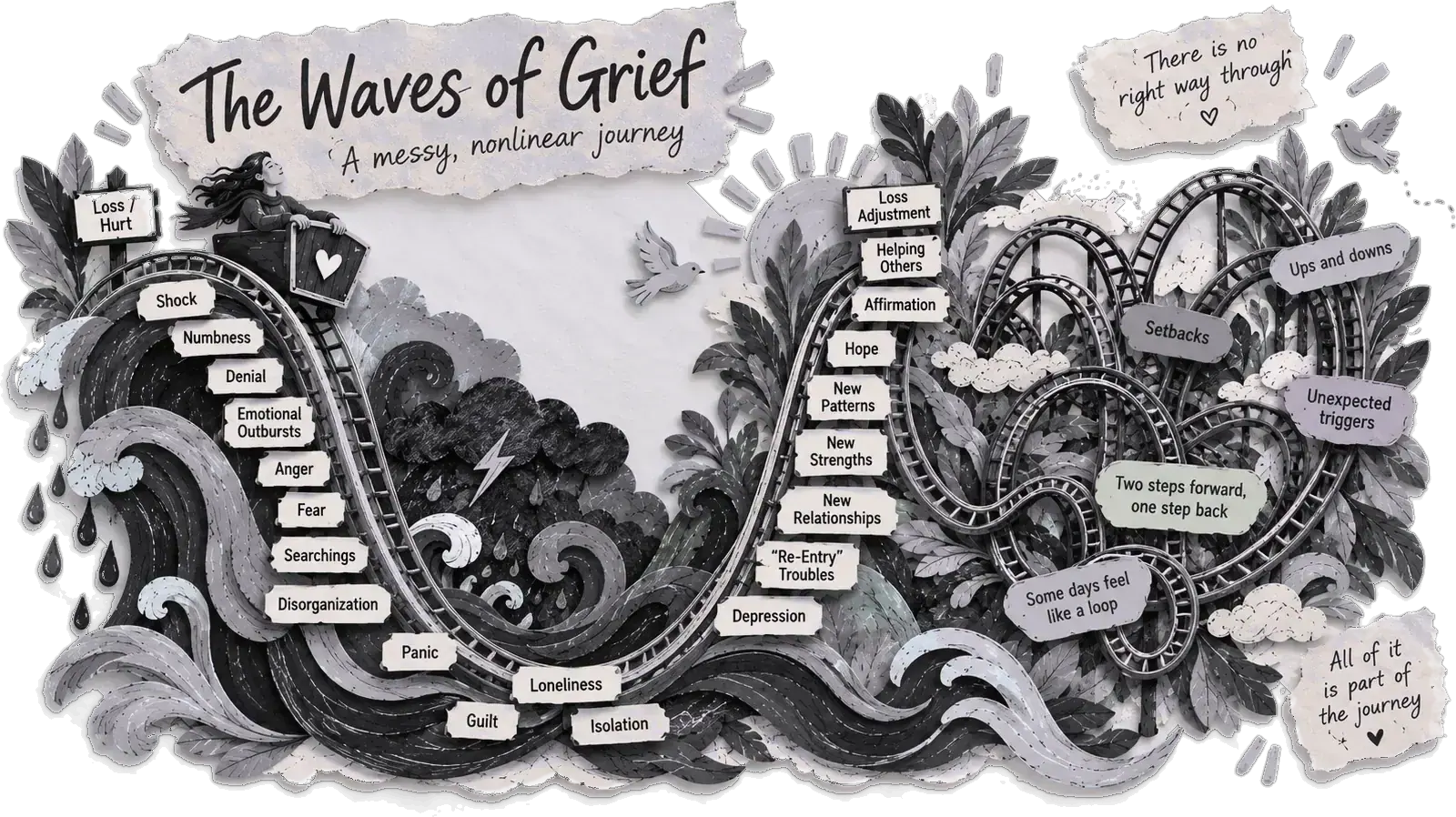
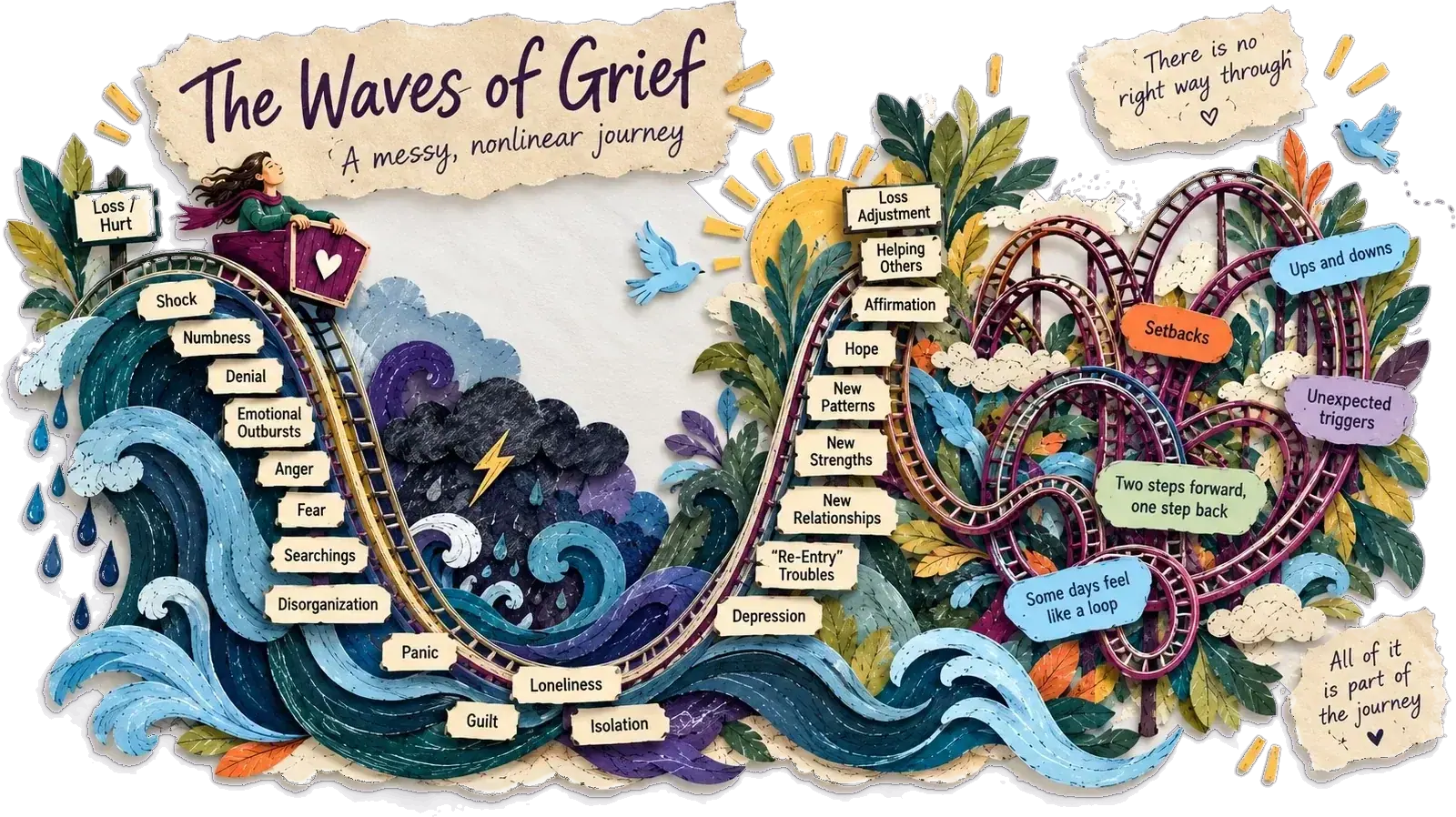
The waves
There is no right way through. Protest: high energy, searching, on alert. Despair: heavy, withdrawn, conserving. Same woman, different demands on the same battery — often in the same afternoon.


One change pulls others behind it
The person. Then the paperwork. The second income. Who she cooked for. Who did the driving. Who she told things to. Secondary losses arrive one by one, and every one of them costs energy.


Lifelessness · lethargy · apathy
This is what vitality looks like when the battery can't keep up. Not weakness. Not a character flaw. A plant that hasn't been watered — because the person who watered it was her, and she was busy surviving.
Chapter 3 of 9
Allostatic overload, and the things the body cuts first
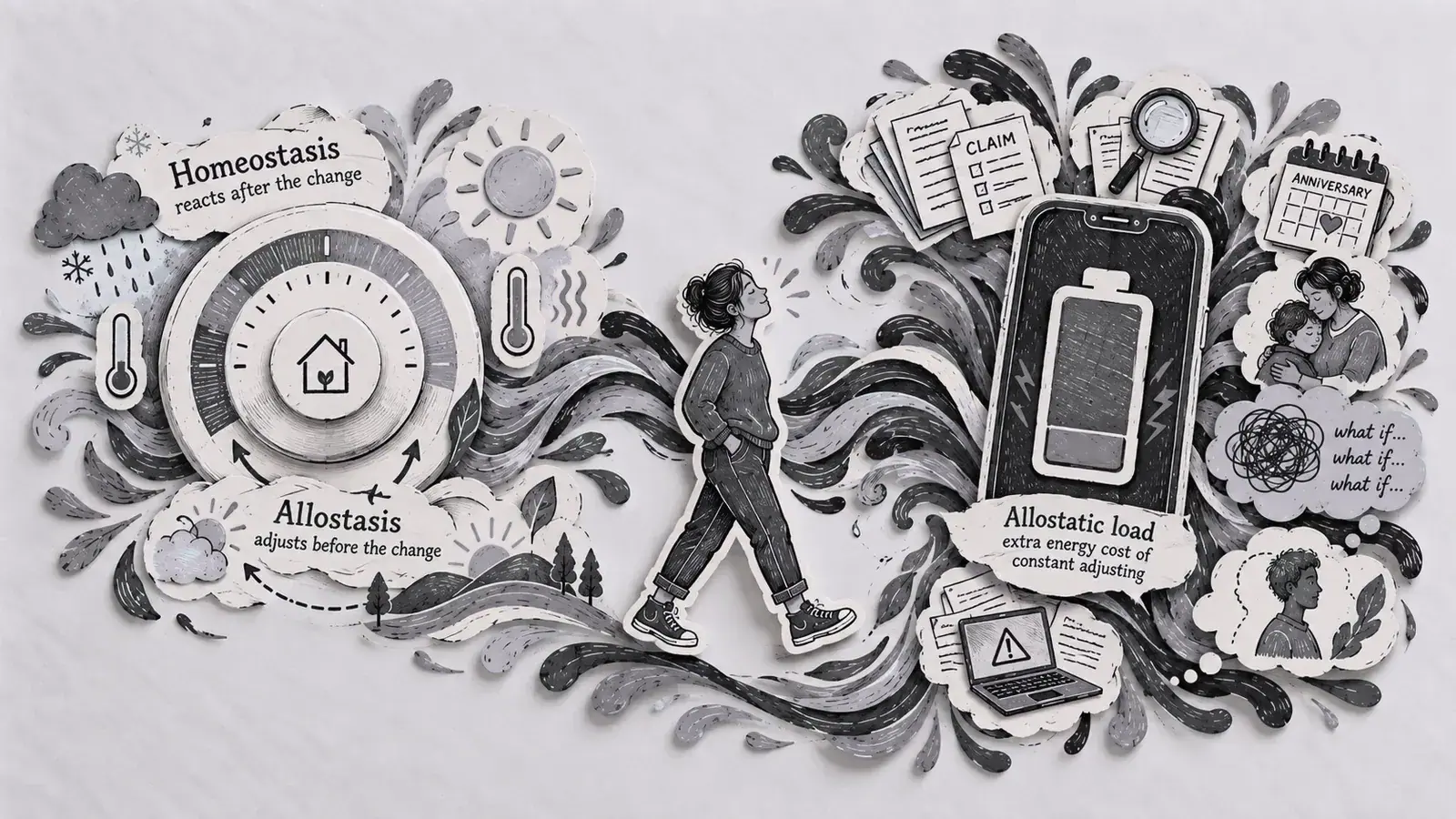
The thermostat and the battery
Constant adjusting has a price. Scientists call it allostatic load: the energy cost of a body that never gets to stop predicting danger. It isn't the tasks that exhaust her. It's the bracing.
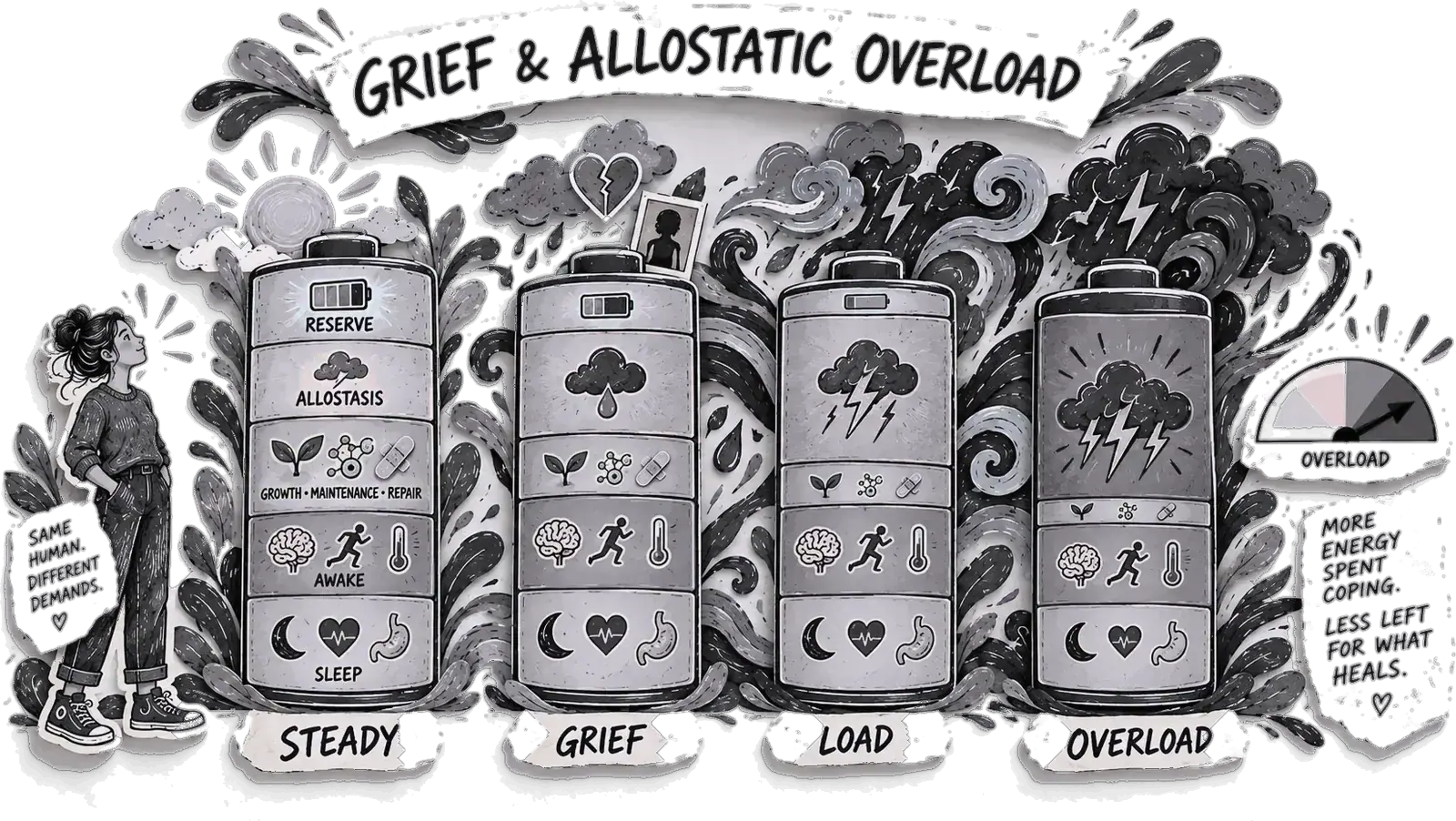
Grief & allostatic overload
Steady. Grief. Load. Overload. Same woman, same demands — more energy spent coping, less left for what heals.
Steady — same demands, full reserve
Field note · Life changes carry a price tag. On the Social Readjustment Rating Scale, the death of a spouse or partner is item number one. Wallace et al., 2023 update.
What gets cut first
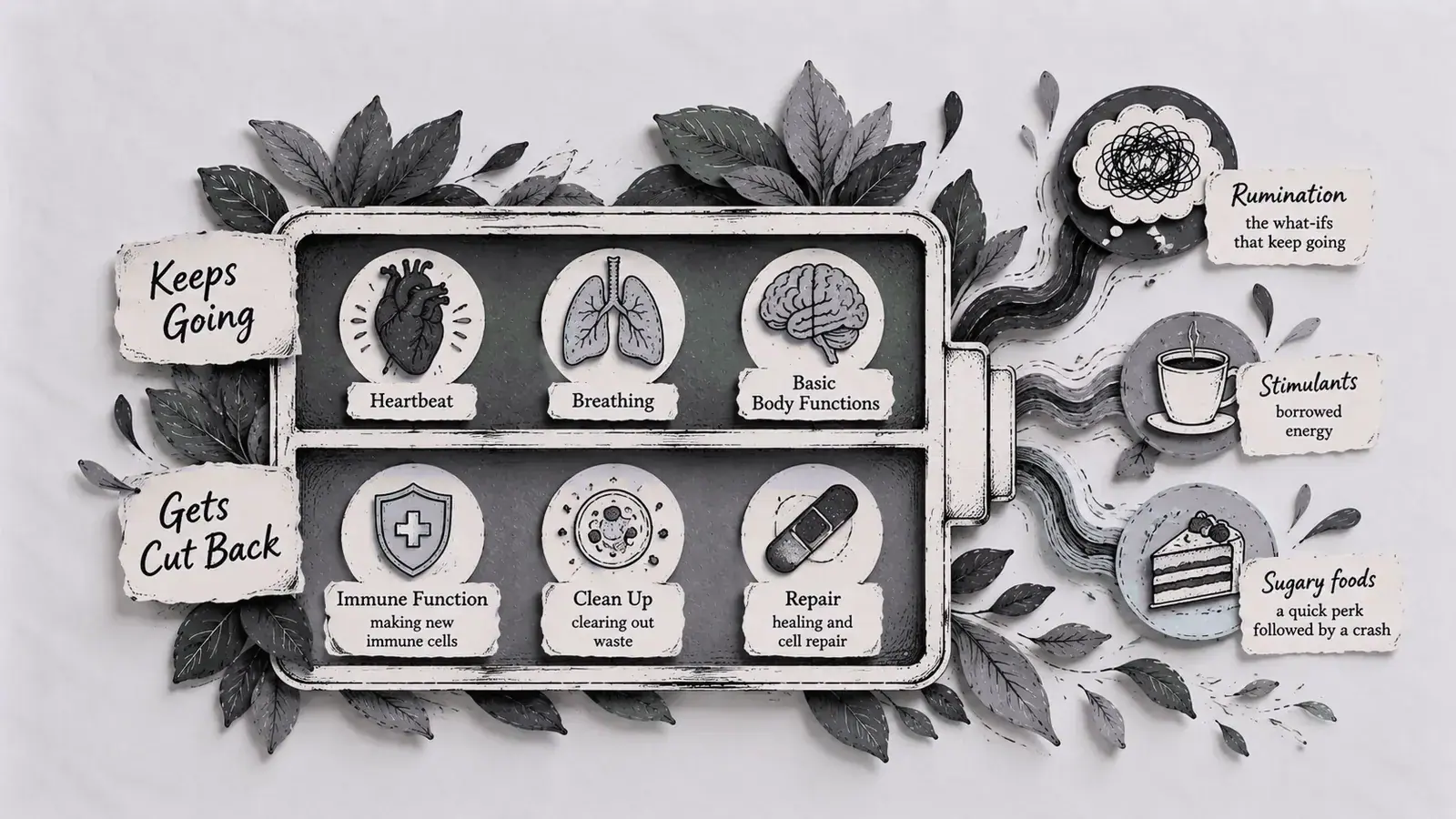
When the budget runs short, the body triages. Heartbeat, breathing, basic function: non-negotiable. Immune function, cleaning up, repair: cut back. That's why she catches everything, heals slowly, and aches.
KEEPS GOING
GETS CUT BACK
Why can't I just push through?
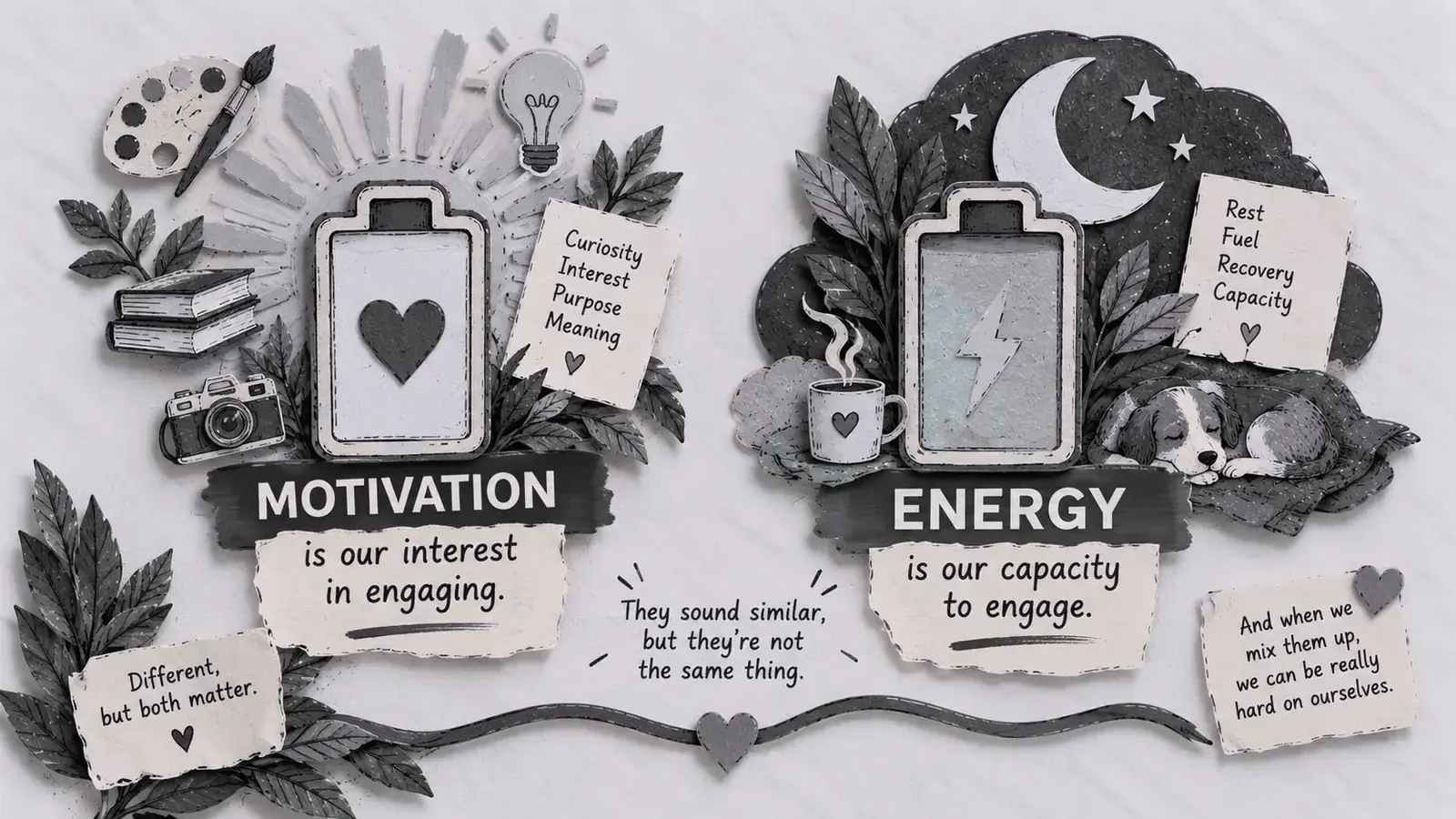
Motivation is interest in engaging. Energy is capacity to engage. They sound similar; they are not. Some days she has motivation but no energy. Some days energy but no motivation. Some days neither.
Which kind of day is today?
Sometimes the hard thing is stepping back
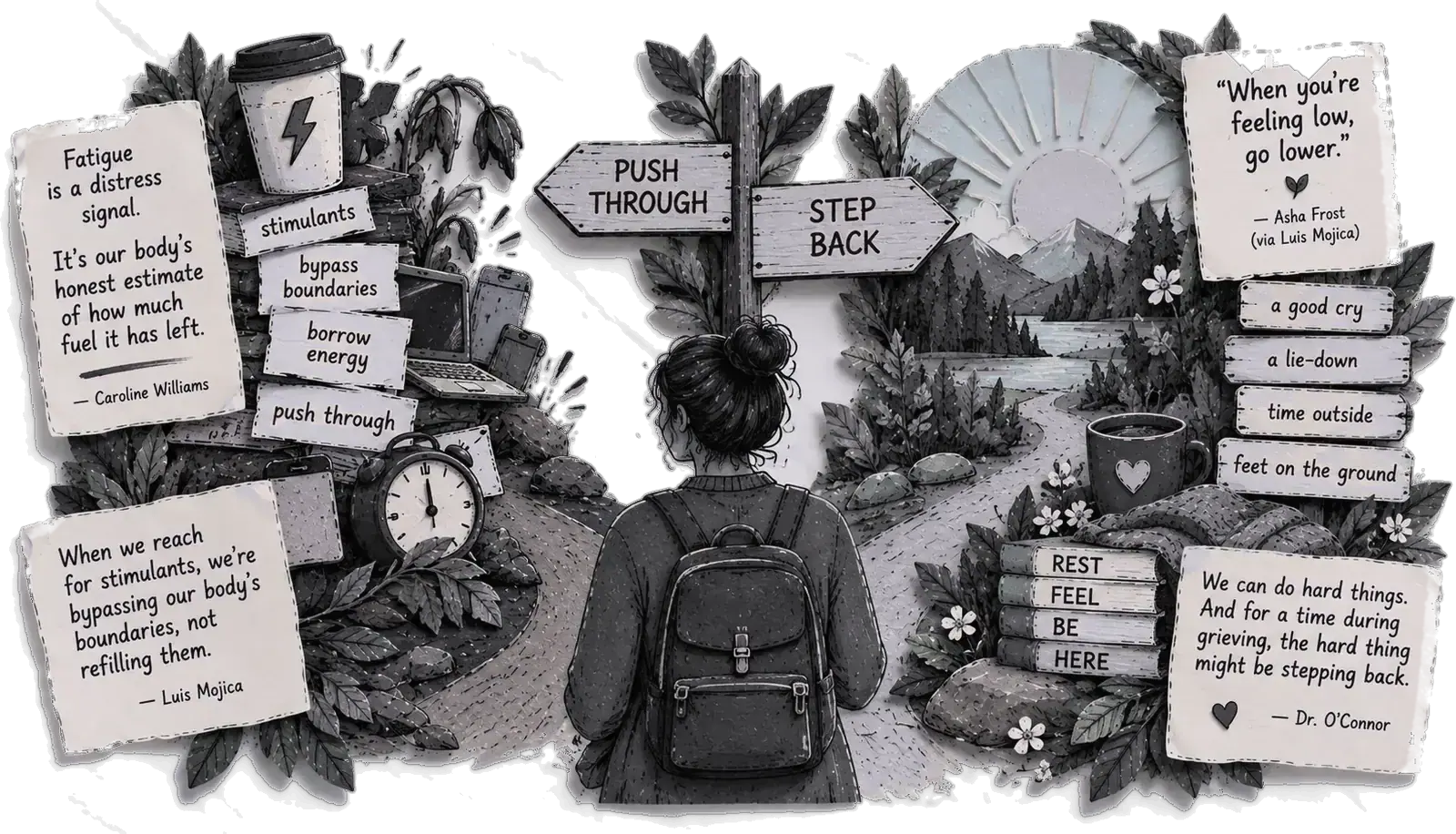
Fatigue is a distress signal — the body's honest estimate of how much fuel is left. Stimulants borrow energy; they don't refill it. For her, the brave move is often the smaller one.
Field note · Check in with your doctor. Exhaustion, chest symptoms, big changes in weight or sleep deserve a medical look — especially in those first months.

Chapter 4 of 9 · Puts energy in
Puts energy in


Appetite down, appetite up
The first colour to come back is green. Grief changed her appetite in both directions — nothing tasted like anything, or everything was a craving. Neither is a failure. Both are the nervous system looking for something.
Field note · In a classic study of bereaved adults, intake fell by roughly a fifth, half said mealtimes were no longer enjoyable, and most named loneliness at the table as the hardest part. Rosenbloom & Whittington, 1993.
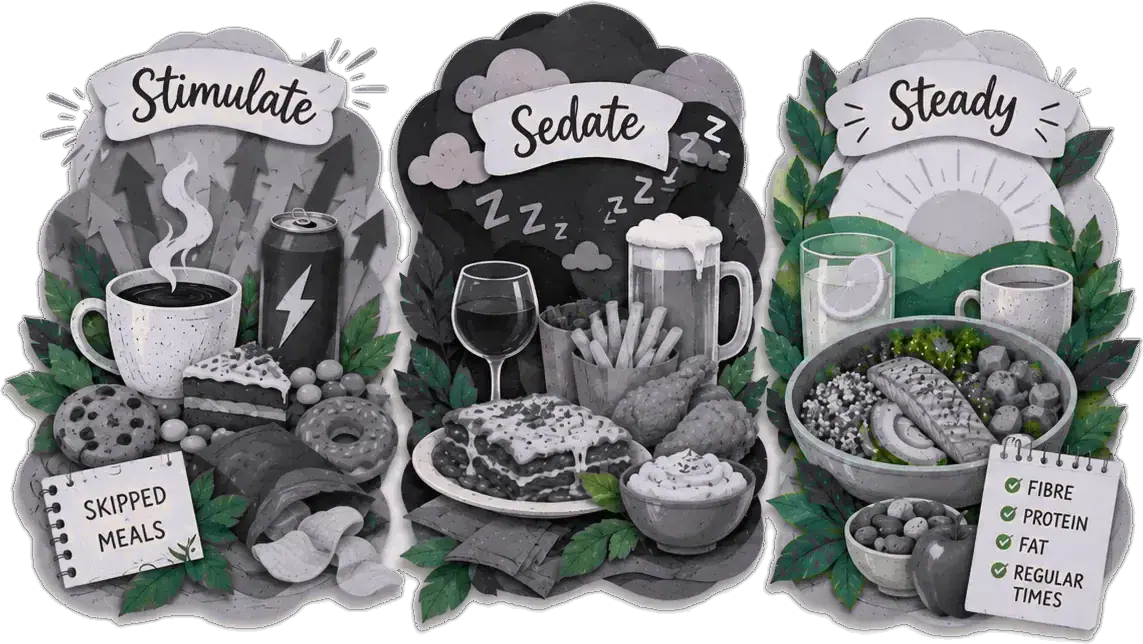
What is this craving asking for?
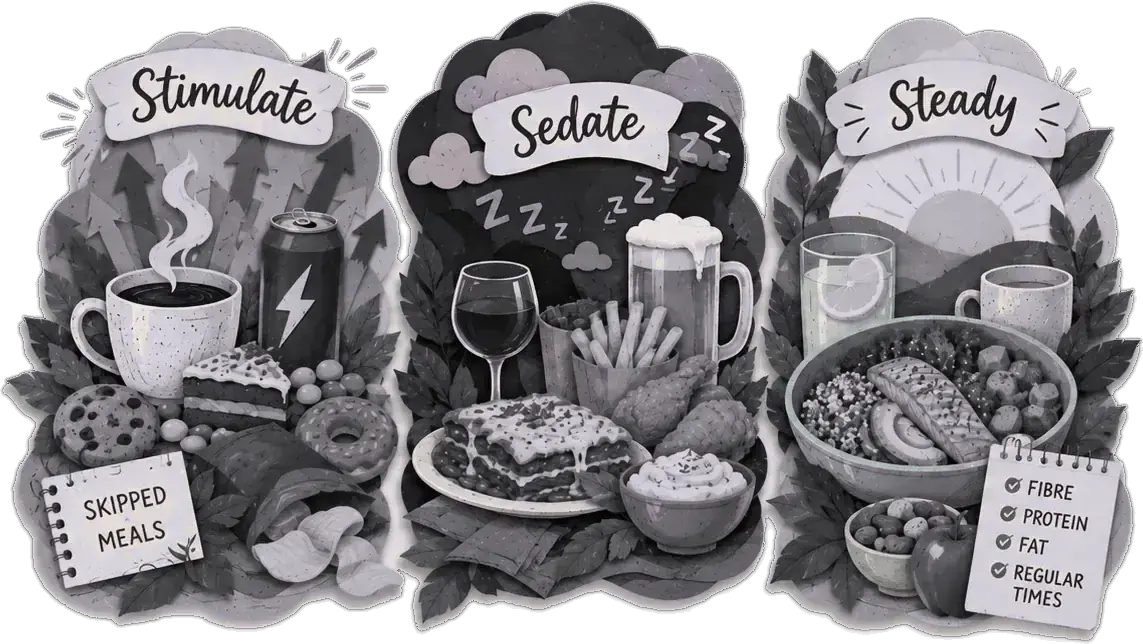
Coffee or tea. Something sweet. Something salty or crunchy. Nothing at all. Each one is a question — a nutritional need, an emotional need, or a relational need. The answer is rarely 'more willpower'.
Right now, I'd reach for…


Her brain runs on food
Two percent of body weight. Twenty to twenty-five percent of its energy. The organ doing the grieving is the hungriest one she has.
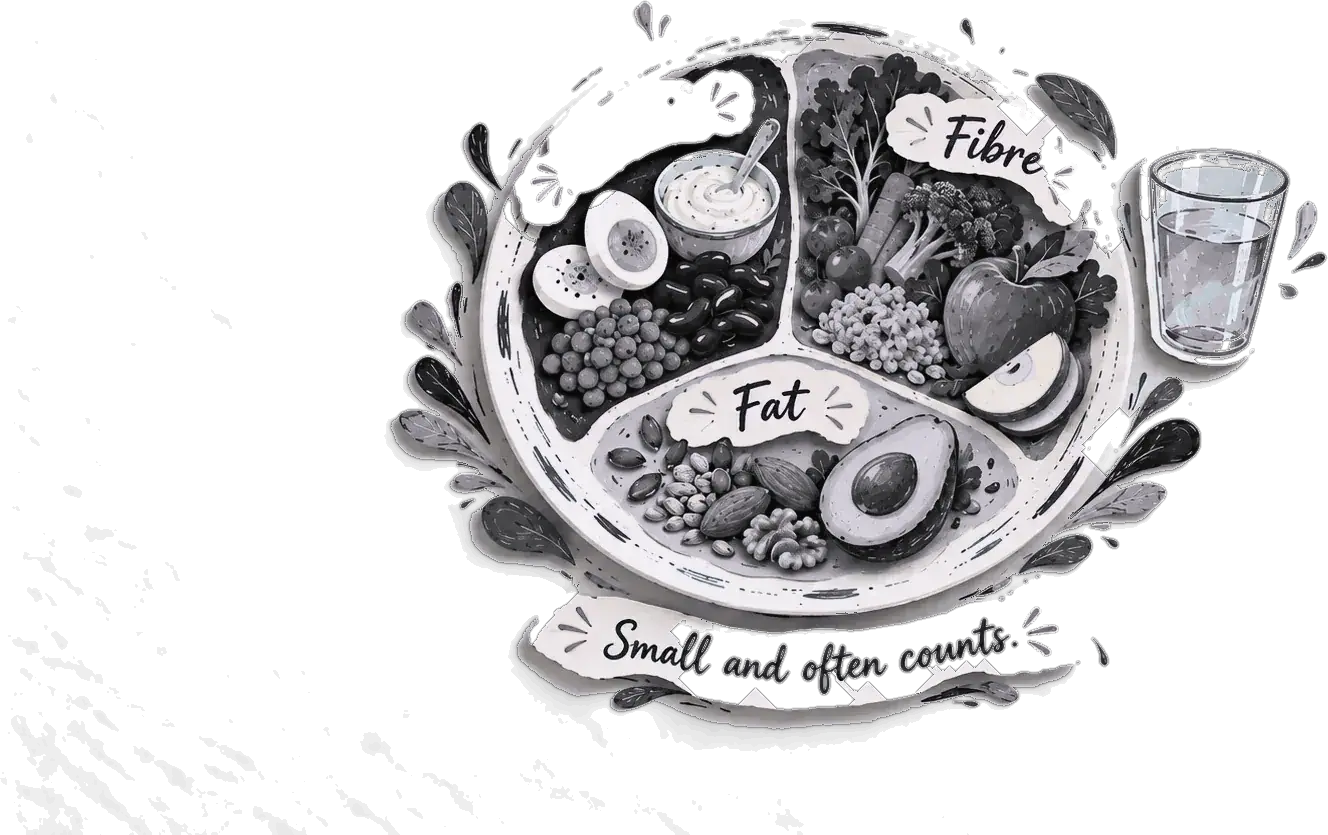
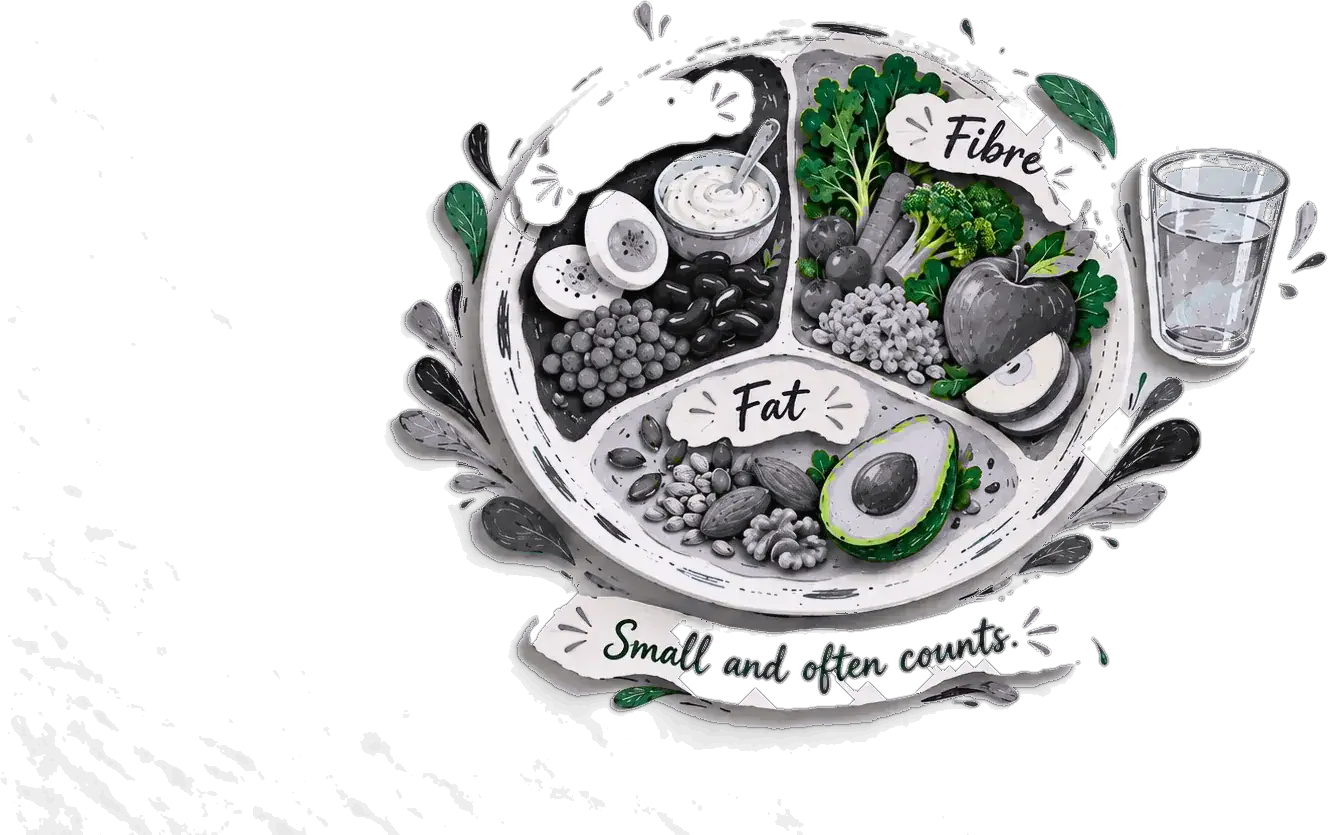
Steady fuel on a plate
Protein. Fibre. Fat. Water. Small and often counts more than big and perfect — steady fuel keeps the seesaw of wired-and-tired from tipping.


Lower the bar
Fed is better than perfect. Cereal is dinner. Cheese and crackers is dinner. Past her, making a container of something for future her, is one of the kindest things a grieving person can do.

Chapter 5 of 9 · Recharges the battery
Recharges the battery


The nights are hard
Blue comes back next. Three a.m. is where her what-ifs live. The cortisol rhythm that used to rise with the morning is flattened, so her body can't tell night from day — wired at midnight, drowning at noon.
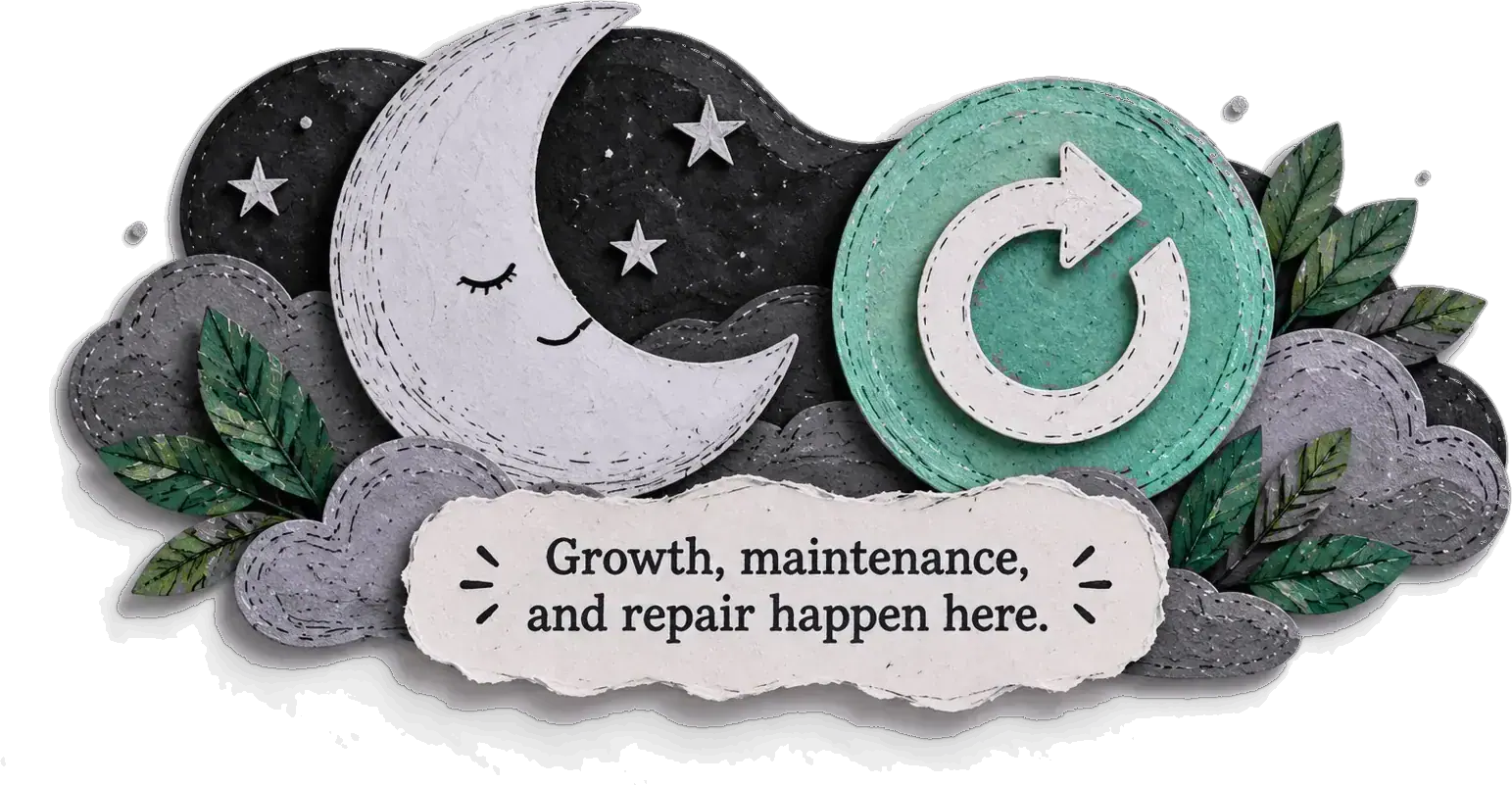
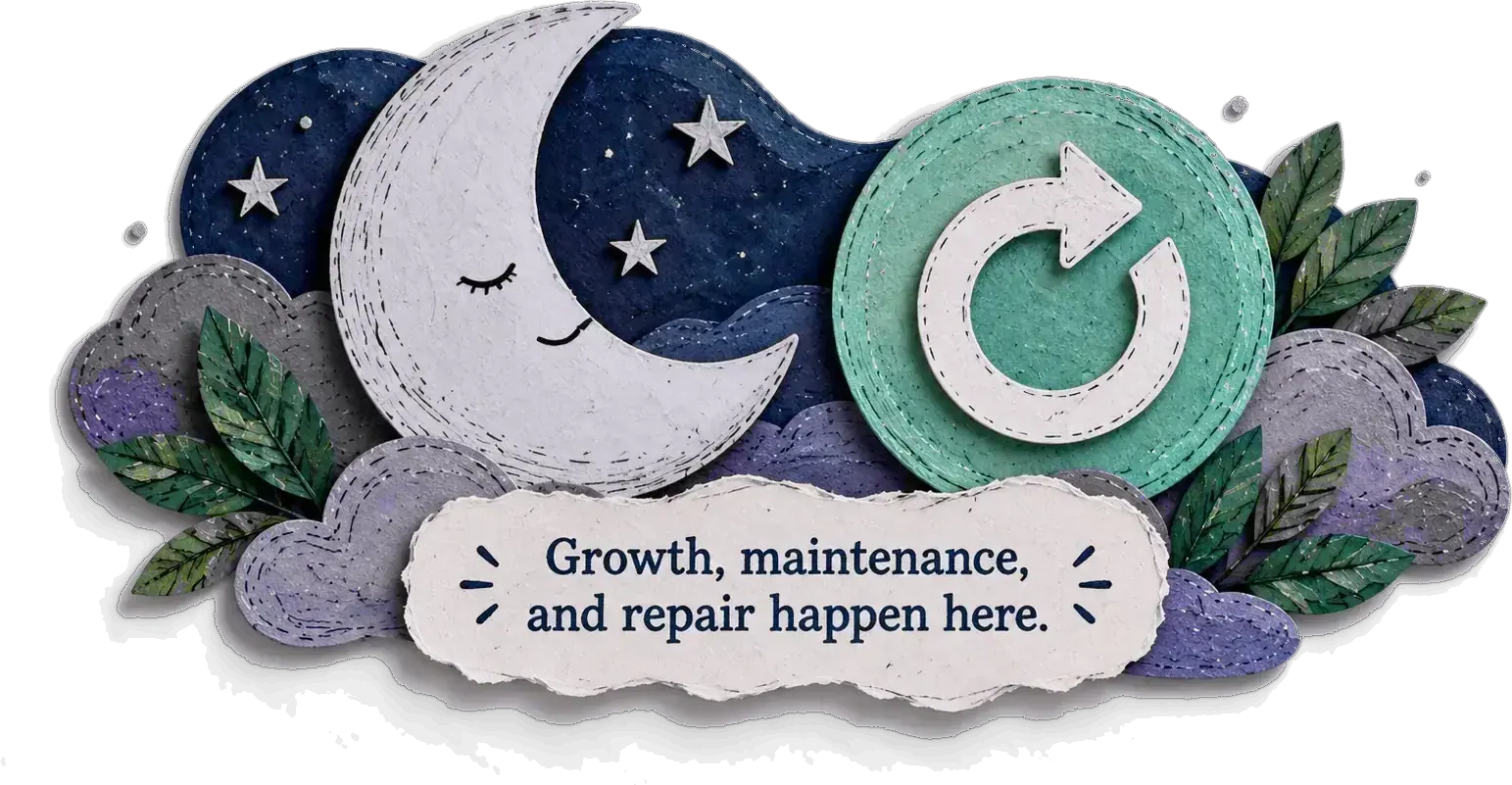
Growth, maintenance and repair happen here
Everything the body cut back during the day — the immune work, the clean-up, the repair — it tries to do at night. Sleep isn't the absence of living. It's the budget line that pays for all the others.
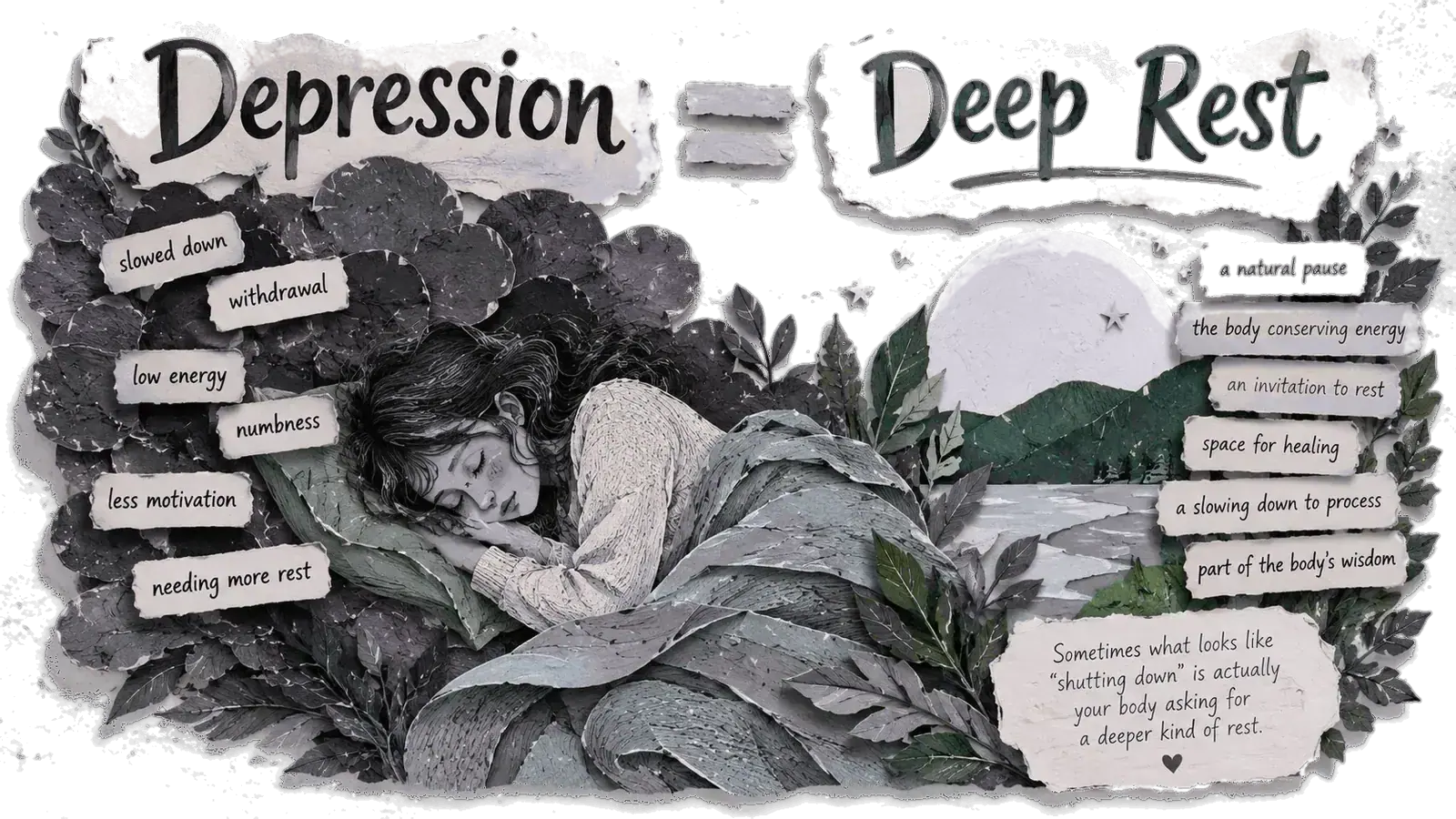
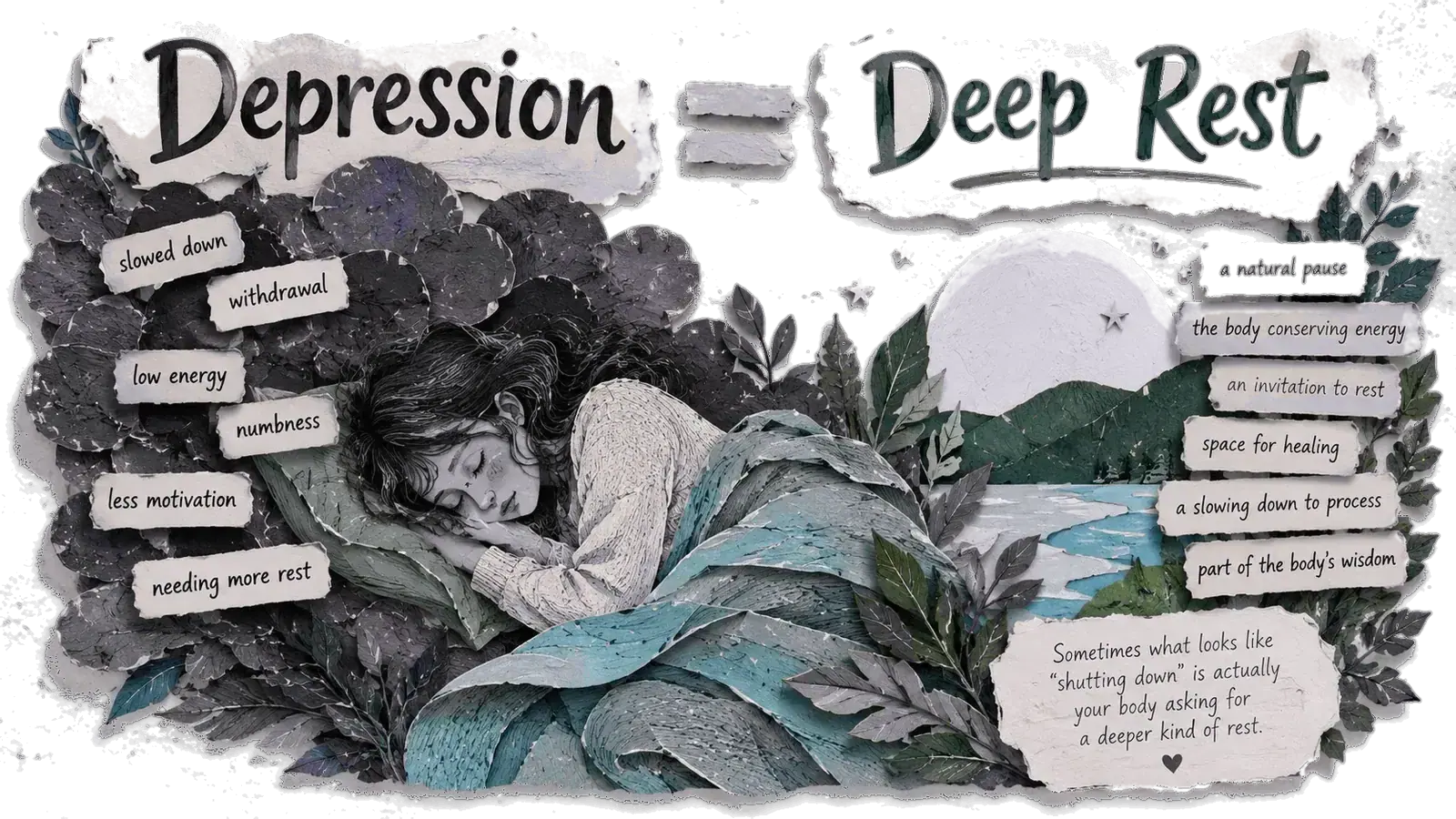
Depression = deep rest
Sometimes what looks like shutting down is the body asking for a deeper kind of rest. Slowed, withdrawn, numb: a natural pause. It still deserves a conversation with her doctor — and it deserves to be met without shame.
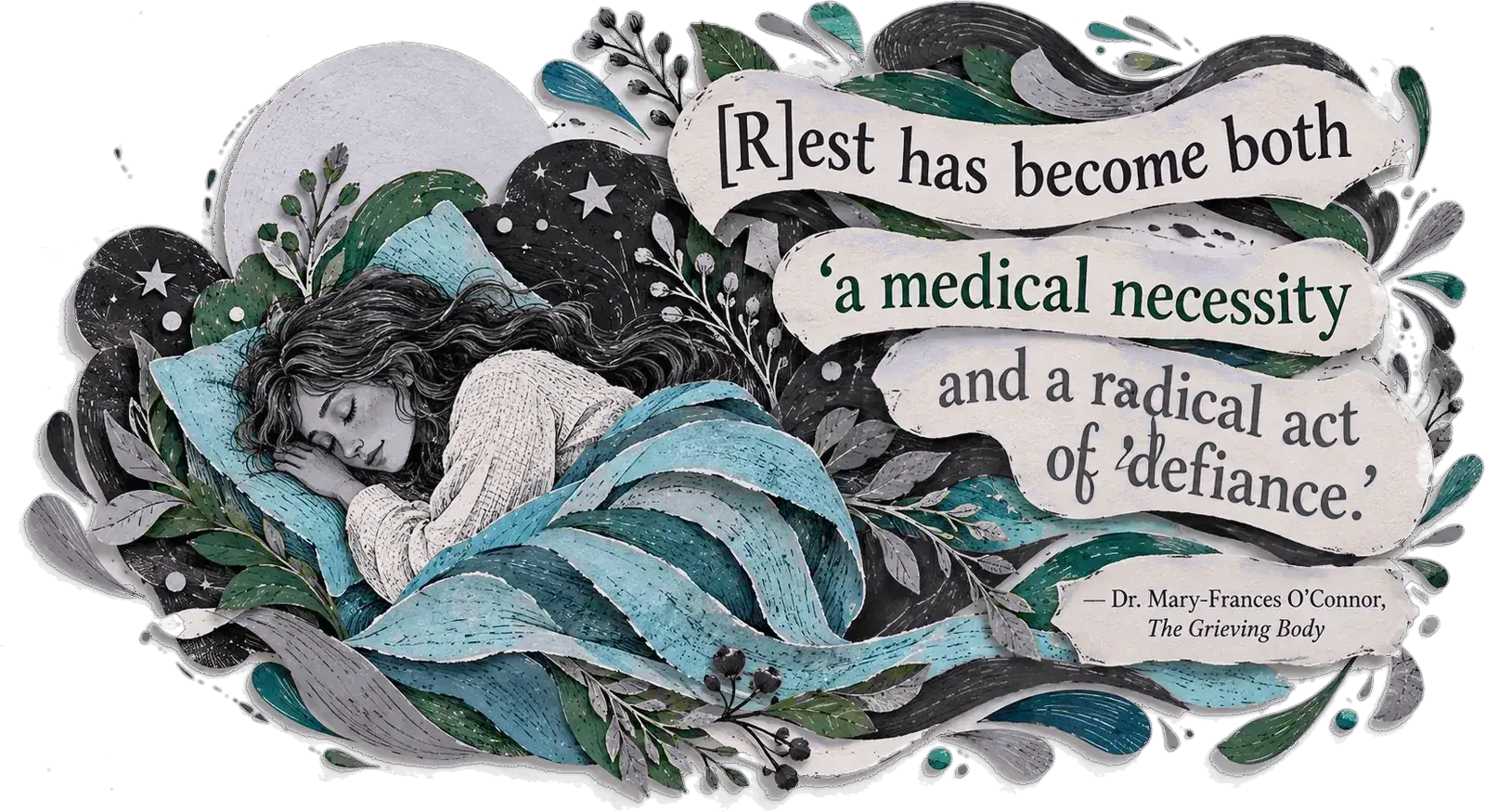
Rest
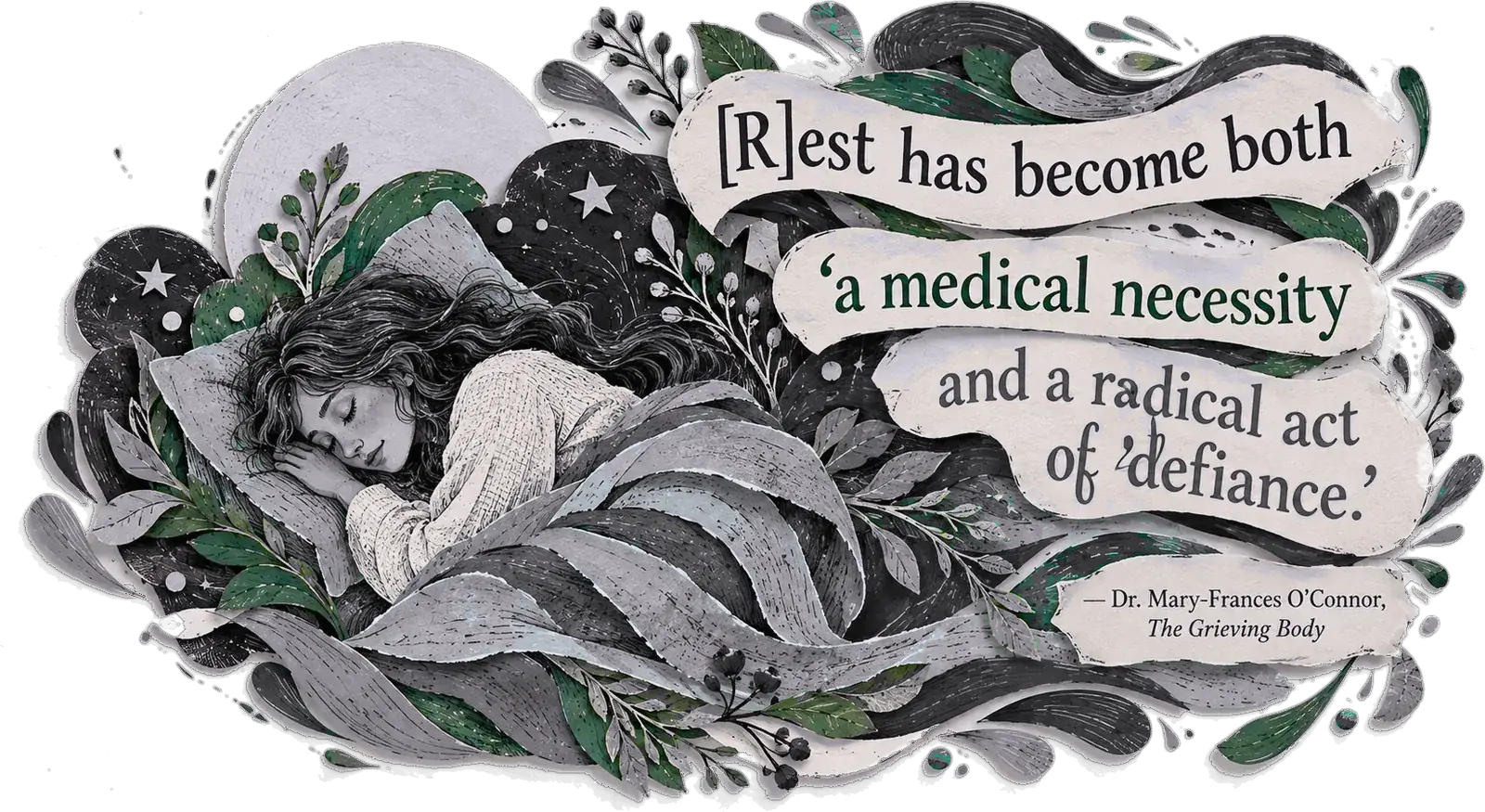
“Rest has become both a medical necessity and a radical act of defiance.” — Dr. Mary-Frances O'Connor, The Grieving Body. She starts with one thing: the same wake-up time, every day, even after a terrible night.

Chapter 6 of 9 · Determines capacity & efficiency
Determines capacity
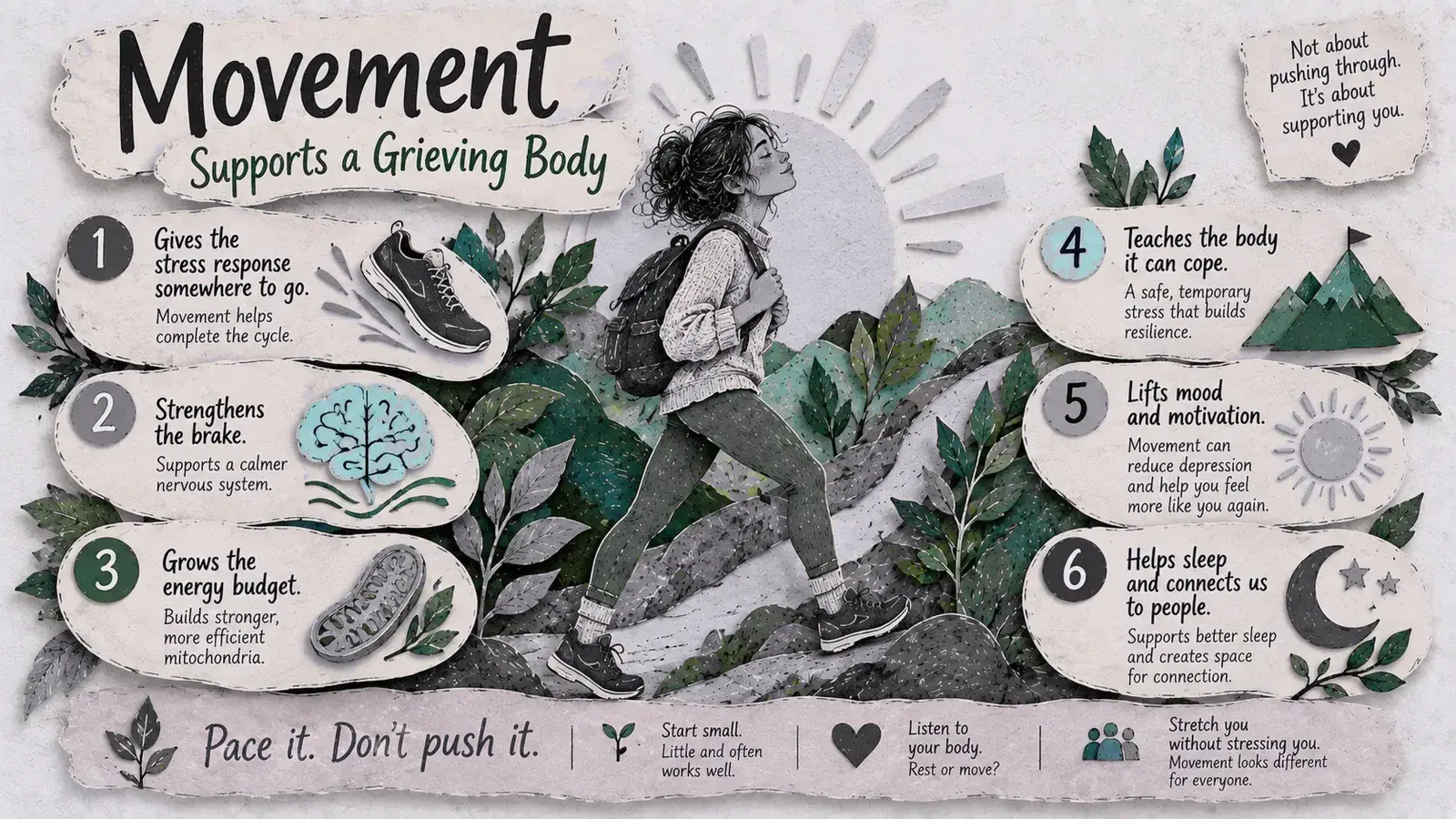
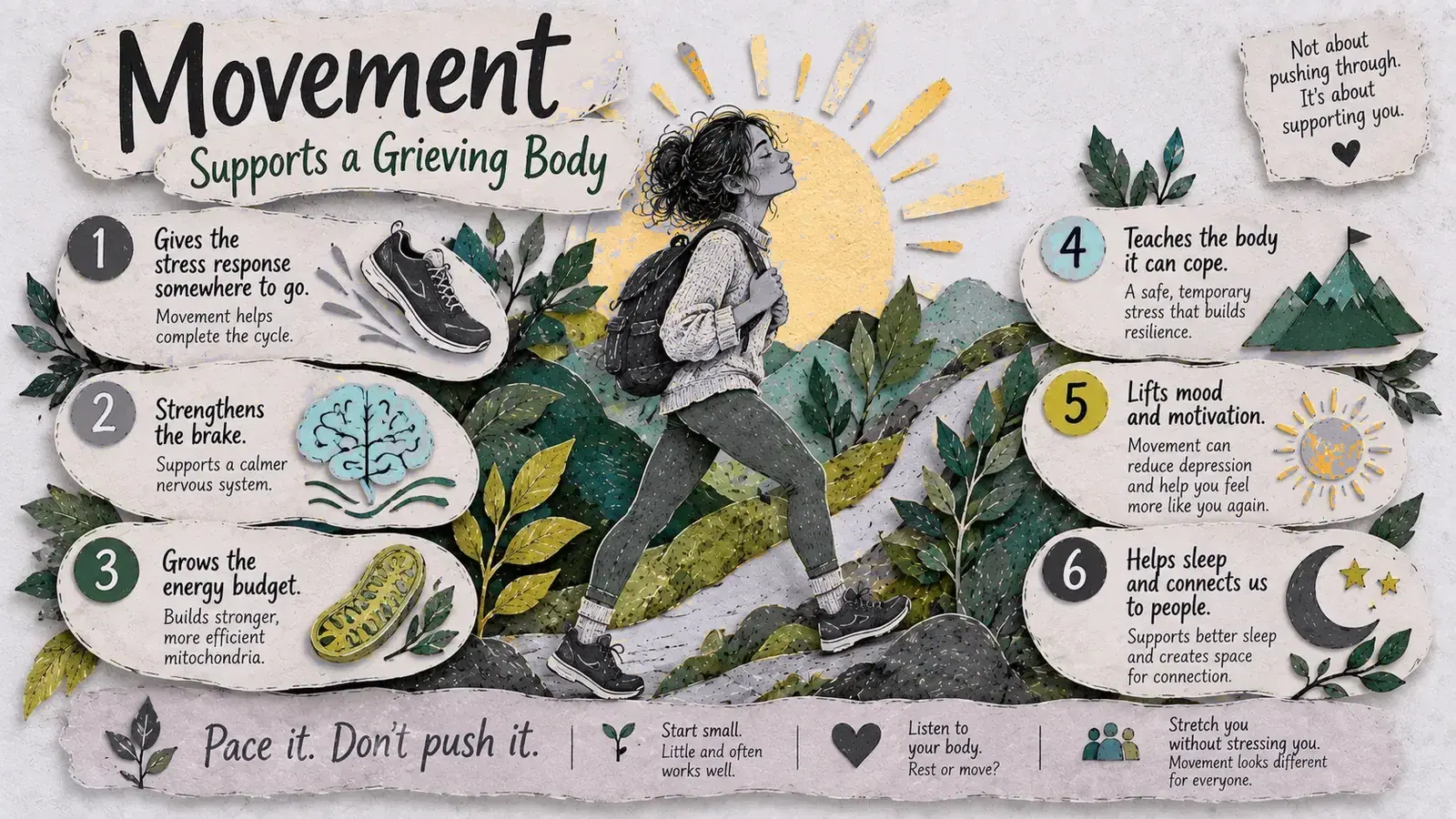
Movement supports a grieving body
Then the yellow-green of new growth. Movement gives the stress response somewhere to go. It strengthens the brake, grows the energy budget, and teaches the body — in small, safe doses — that it can cope.
Field note · Not about pushing through. It's about supporting you. Start small; little and often works well. Listen to your body: rest, or move?


Rise and recover
Heart rate up, then down. Breath fast, then slow. A walk is her body rehearsing the whole cycle — alarm, and then recovery — with her in charge of the ending.


It gets easier
Out the door. To the market. To a table with someone. Pace it, don't push it: the goal is a body that trusts her again, not a personal best.

Chapter 7 of 9 · Regulates energy use
Regulates energy use
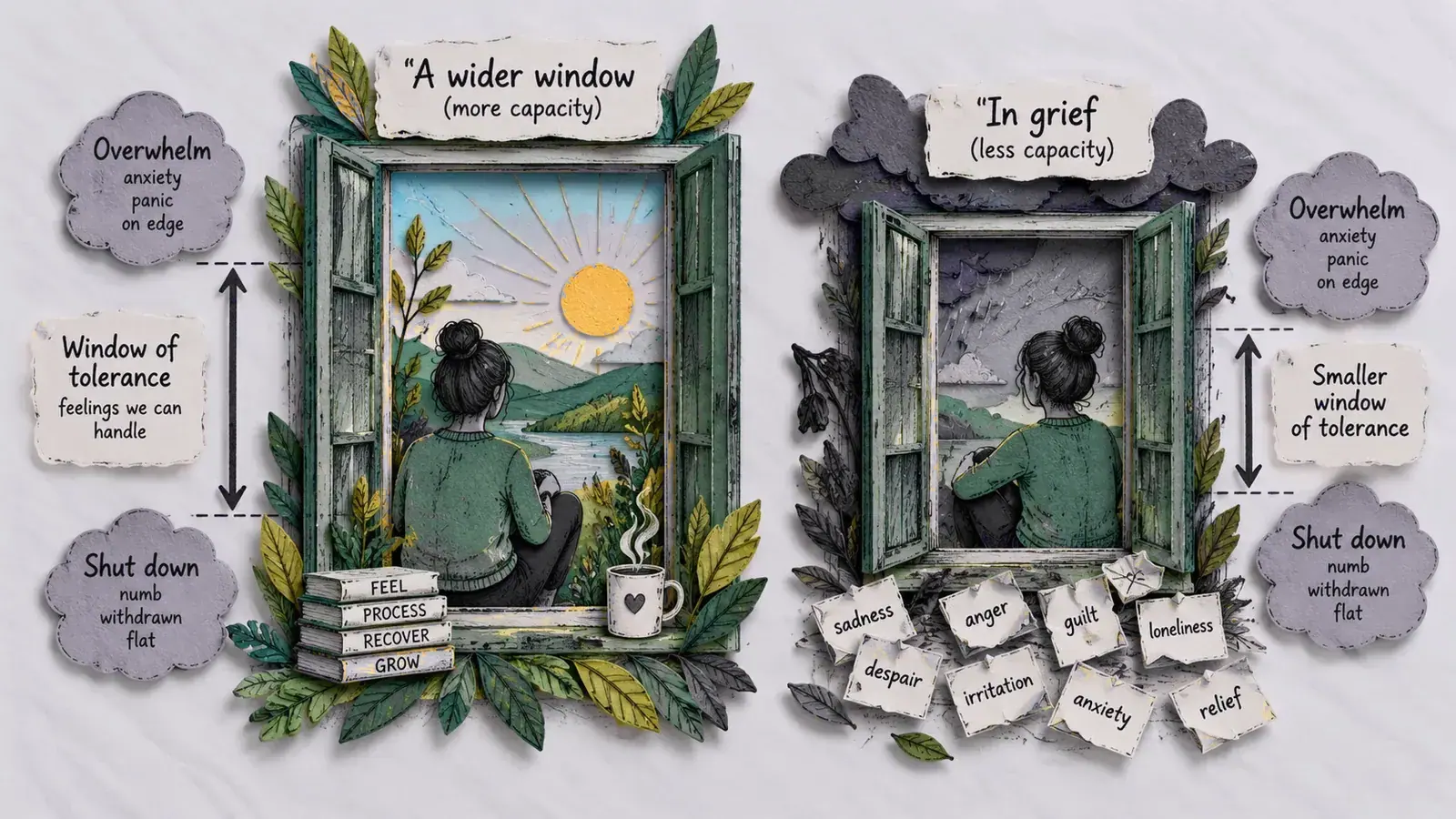
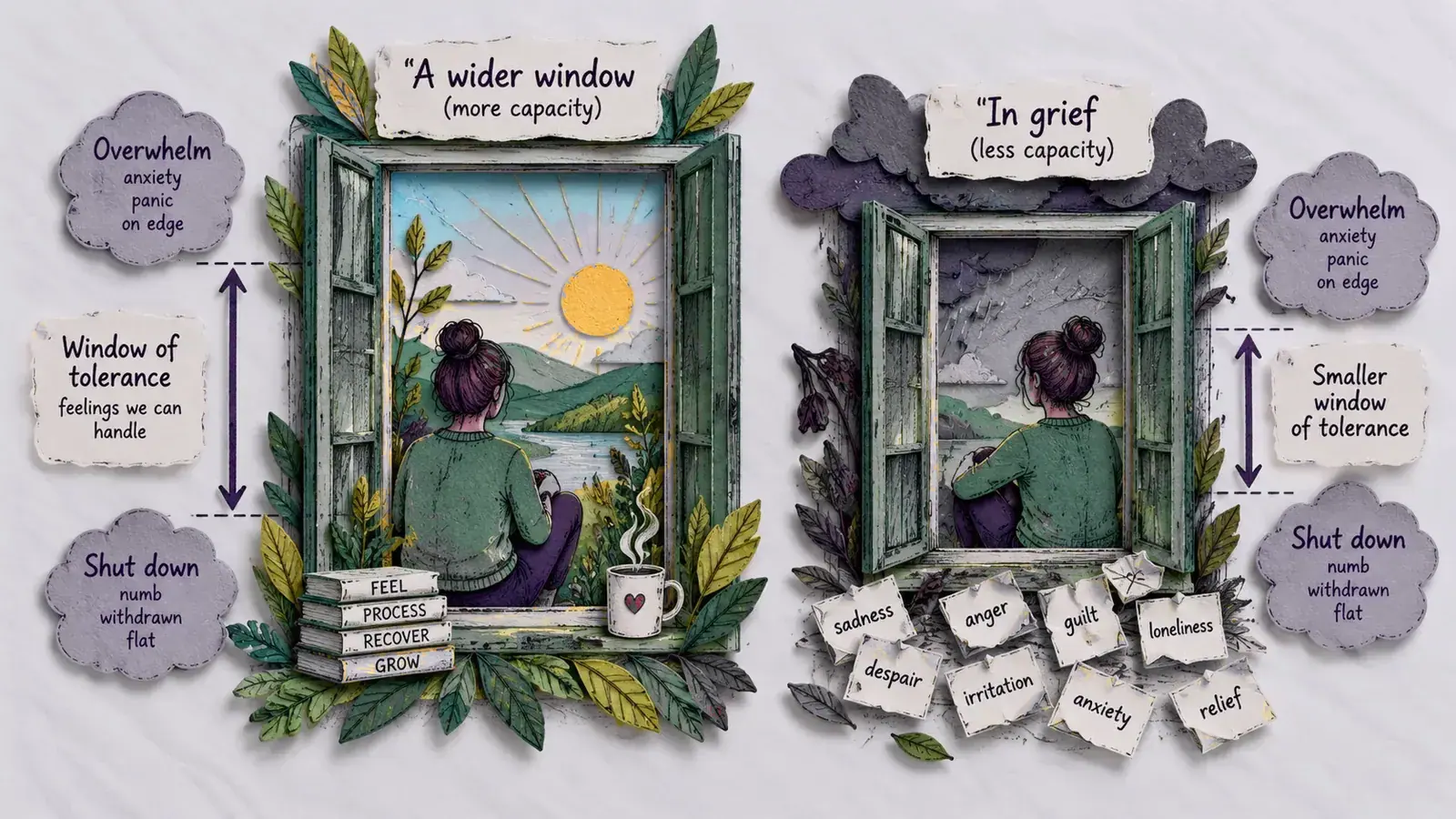
Our emotions and our window
Magenta returns — the colour of feeling. Everyone has a window of tolerance: the range of feeling we can handle without tipping into overwhelm or shutting down. Grief narrowed hers. The work is widening it back, gently.
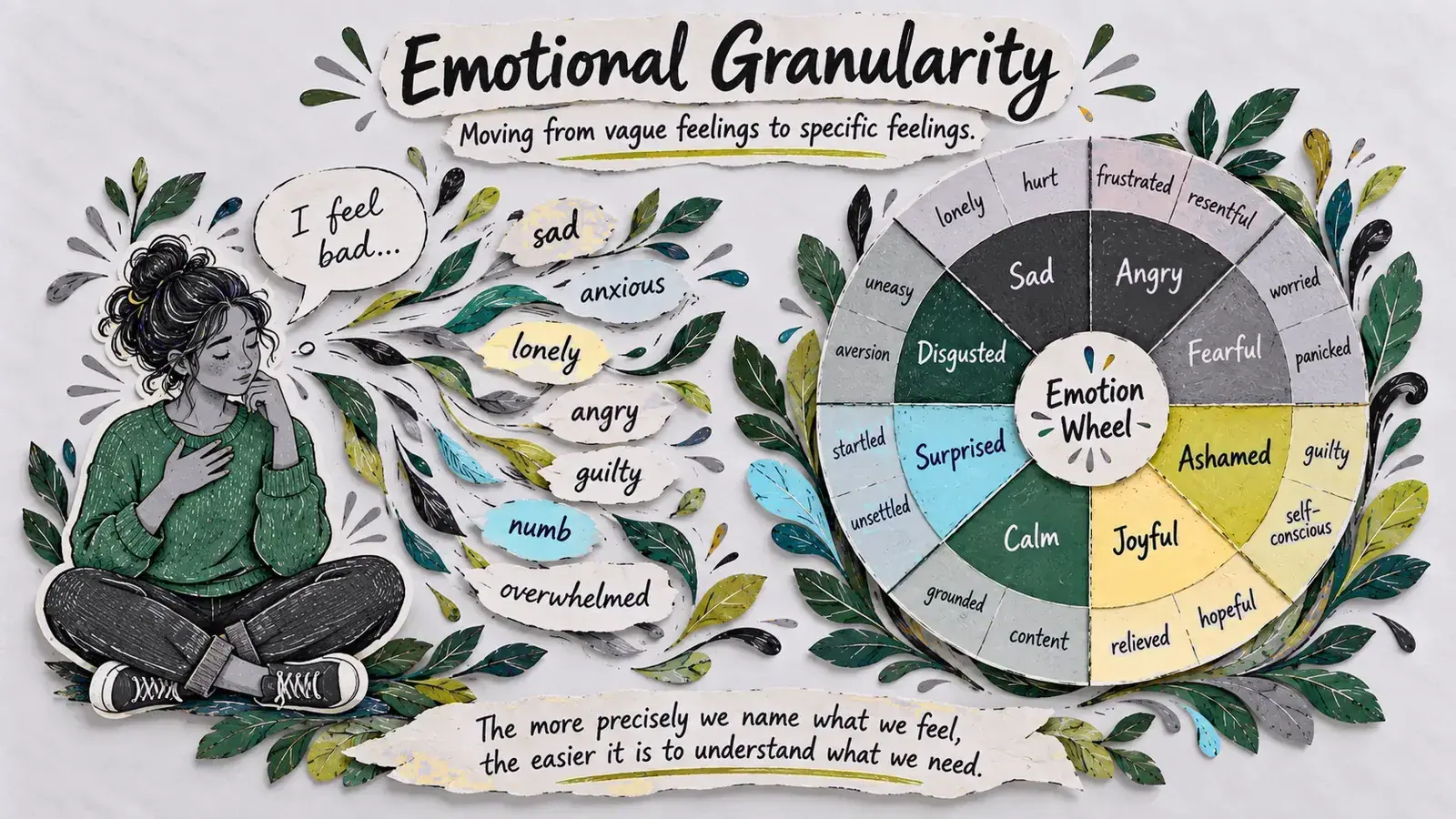
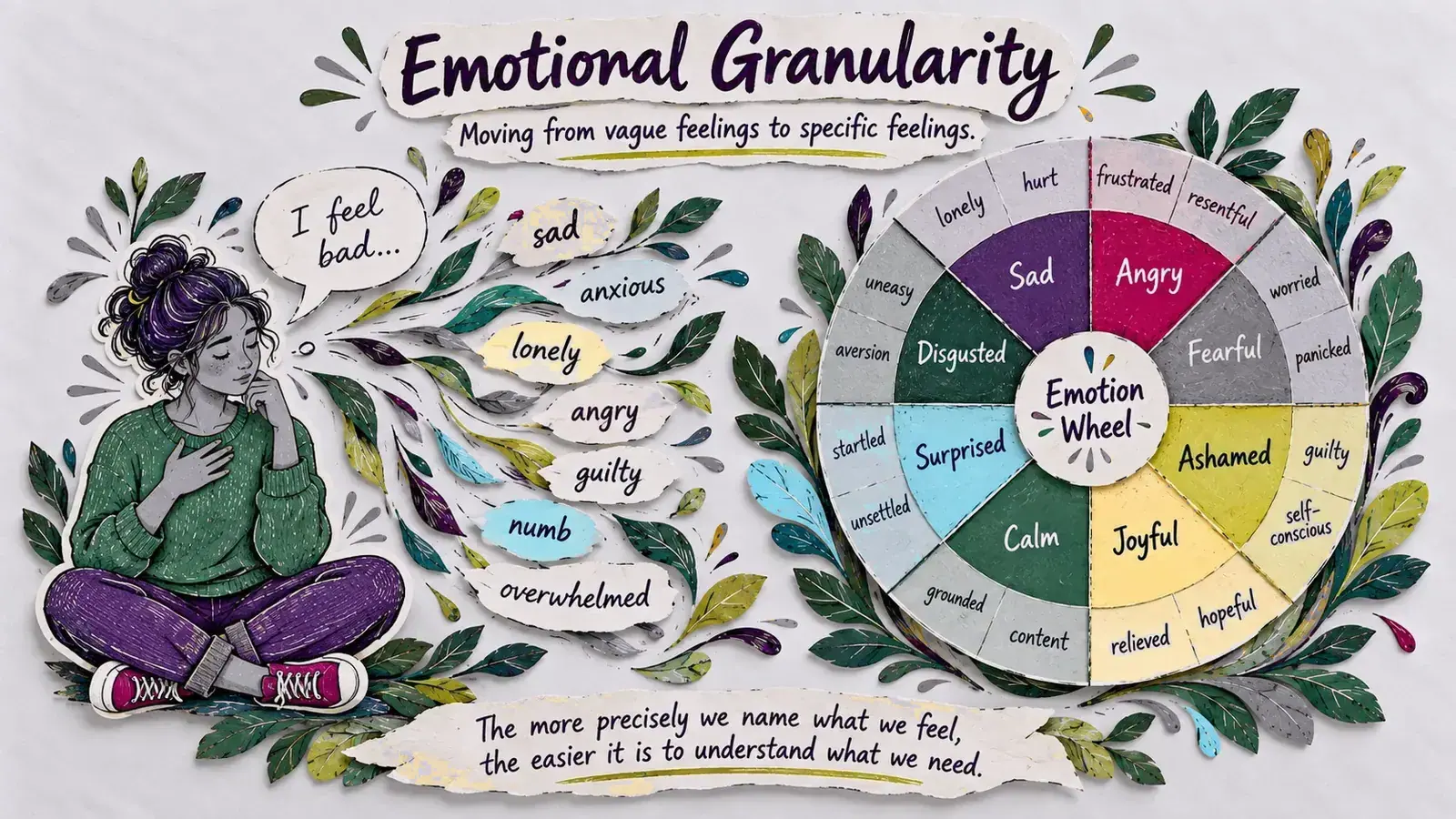
Emotional granularity
“I feel bad” costs more energy than “I feel lonely at dinner.” The more precisely we name a feeling, the easier it is to understand what it needs — and the less the alarm has to fire to get our attention.


Finding the brake
In for three. Out for seven. A longer exhale is the one handle on the nervous system she can reach from anywhere — and so can you. Try one round as you scroll.
Breathe in… slowly, as you scroll
Inhale 3 · Exhale 7 — the scroll sets the pace


Positive emotion makes more room
The guilt that never came: laughter actually felt good. Joy doesn't take her grief away — it gives her more room to live with it. She collects the glimmers. They're not betrayals; they're deposits.

Chapter 8 of 9 · Determines what the battery has to power
Determines what the battery has to power
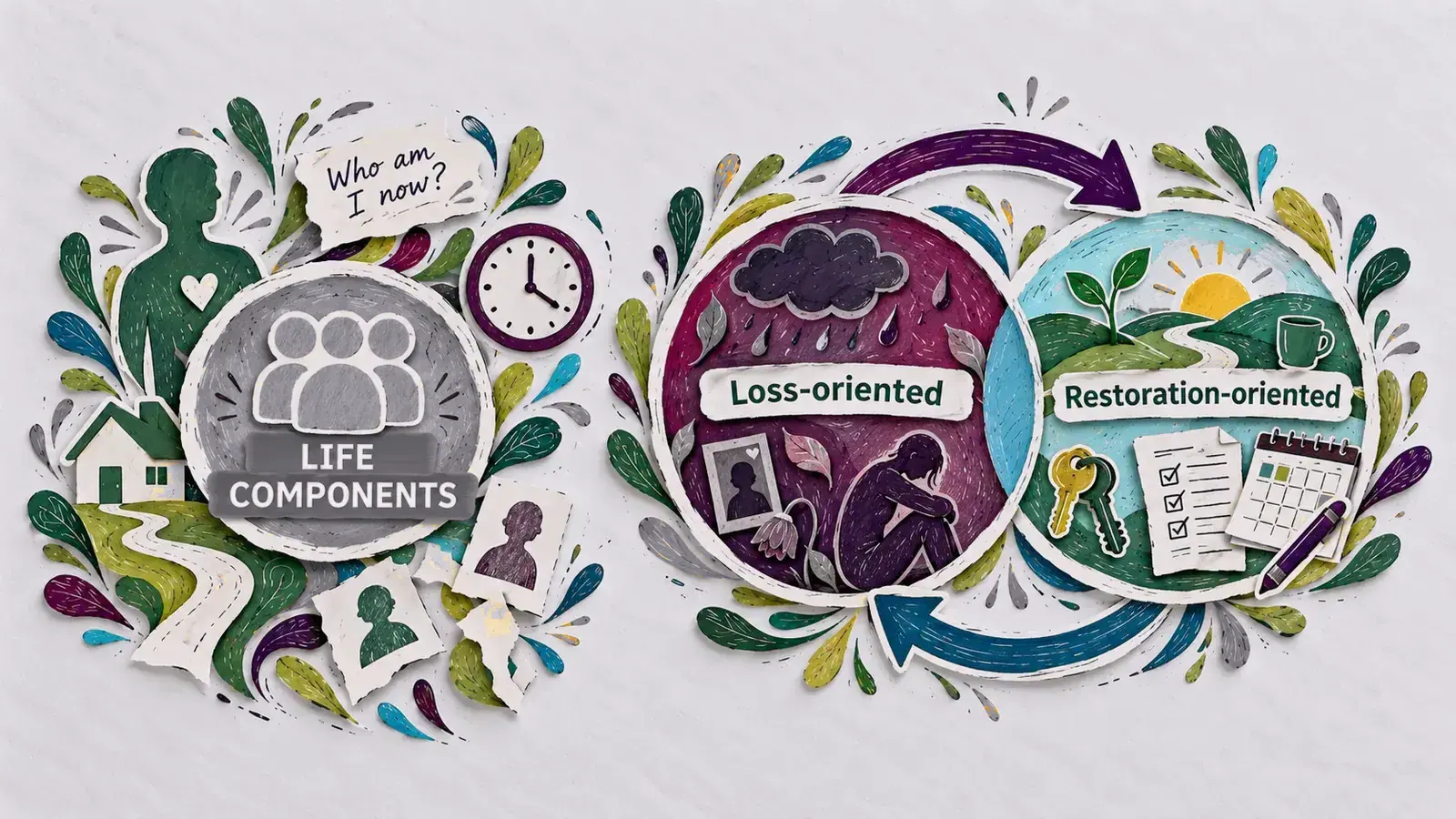
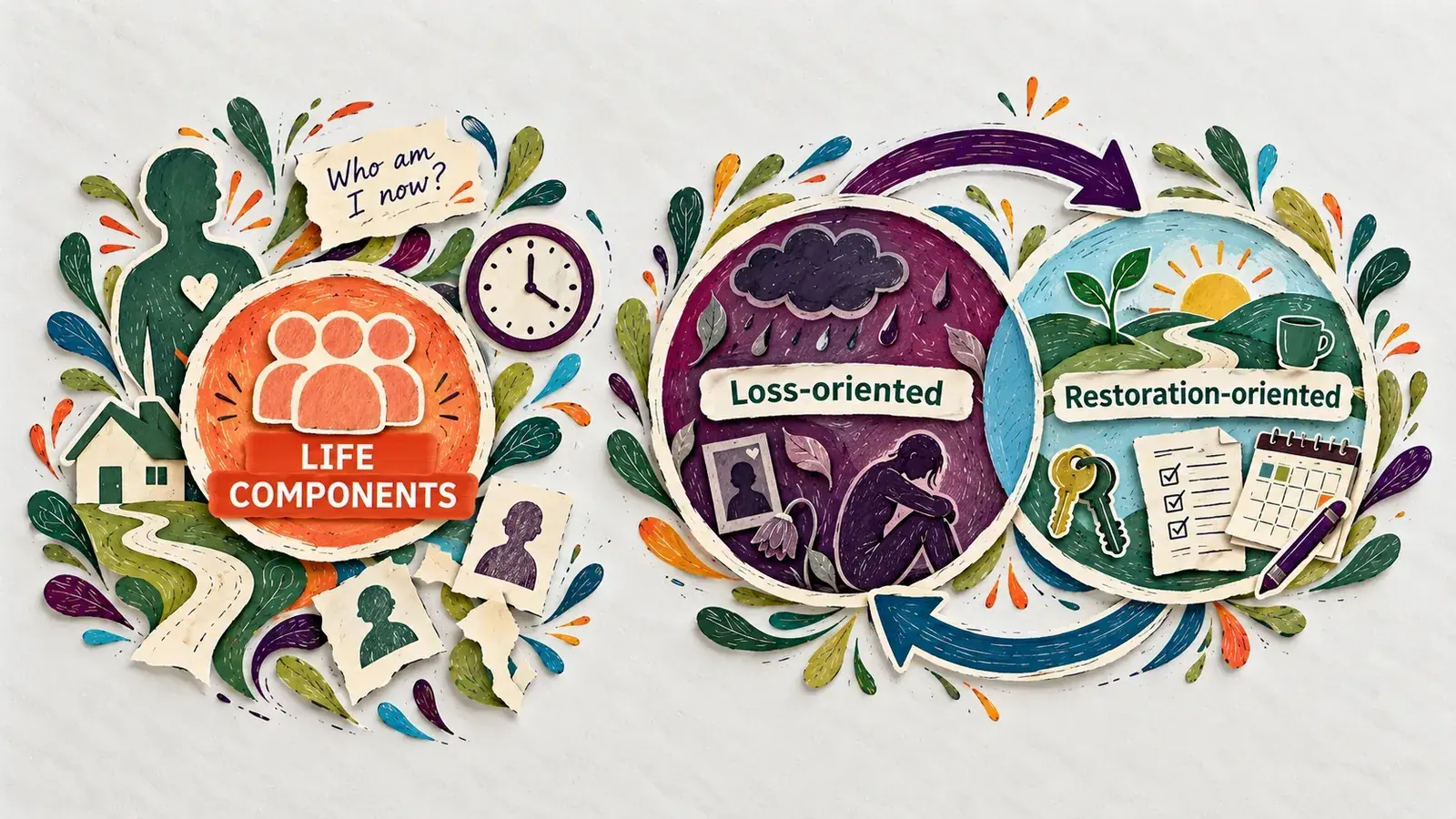
Who we are, and why
Apricot — the colour of the table. Grief has two kinds of work: loss-oriented (the missing) and restoration-oriented (the paperwork, the roles, the dinners she now cooks alone). Healthy grieving moves between them. Both are allowed. Both cost energy.
Field note · The Dual Process Model of coping with bereavement (Stroebe & Schut, 1999). Oscillation is the point; “respite at times is recuperative.”


Her energy bank account
Energy is always coming in and going out. Grief is a withdrawal she didn't authorise. She can't stop the withdrawals — but she can almost always increase the deposits.


Who we ate with
Her loved ones were part of her nervous system — her first co-regulators. Eating alone isn't just quieter. It's physiologically different. Connection nourishes the body too. You may have noticed: in every picture so far, the people around her were the last to get their colour back.


Small ways to pull up a chair
A standing coffee. A walk with one person. A recipe cooked for someone who misses them too. Small ways to pull up a chair — the deposit that refills more than one pillar at a time.
Chapter 9 of 9
Not back to before — forward, with your grief included

Phase three — and now, you
She is not going back to what it was before. She is restoring her life in ways that make it a comfortable place to live now. A new kind of steady — with her grief included, not left behind. And if you have recognised yourself in any of these pictures: this part is yours.

Three levers
Lower the demands. Add resources. Question the shoulds. Plan B before the event, pacing instead of pushing, and rest as a practice rather than a prize.

Refilling across the five domains
All five colours, back. Steady, small and often. Gentle movement. Glimmers. A steady wake-up time. People who get it. Not all at once — one deposit at a time.

Energy to engage. That's all it ever meant. — Vera
Where this story goes next
Twenty free minutes. Five pillars. One place to start.
Book a free discovery callOr: how 1:1 coaching works · bring this story to your group
Sources for the field notes: Carey IM et al. (2014) JAMA Internal Medicine 174(4):598–605 · Rosenbloom CA & Whittington FJ (1993) J Gerontology 48(4):S223–9 · Stroebe M & Schut H (1999) Death Studies 23(3):197–224 · O'Connor M-F (2025) The Grieving Body · Wallace et al. (2023) SRRS update · Siegel D (1999) window of tolerance. Grief is not a disease; nothing here is medical advice. If you're in crisis, call or text 9-8-8 in Canada.